Skip to content
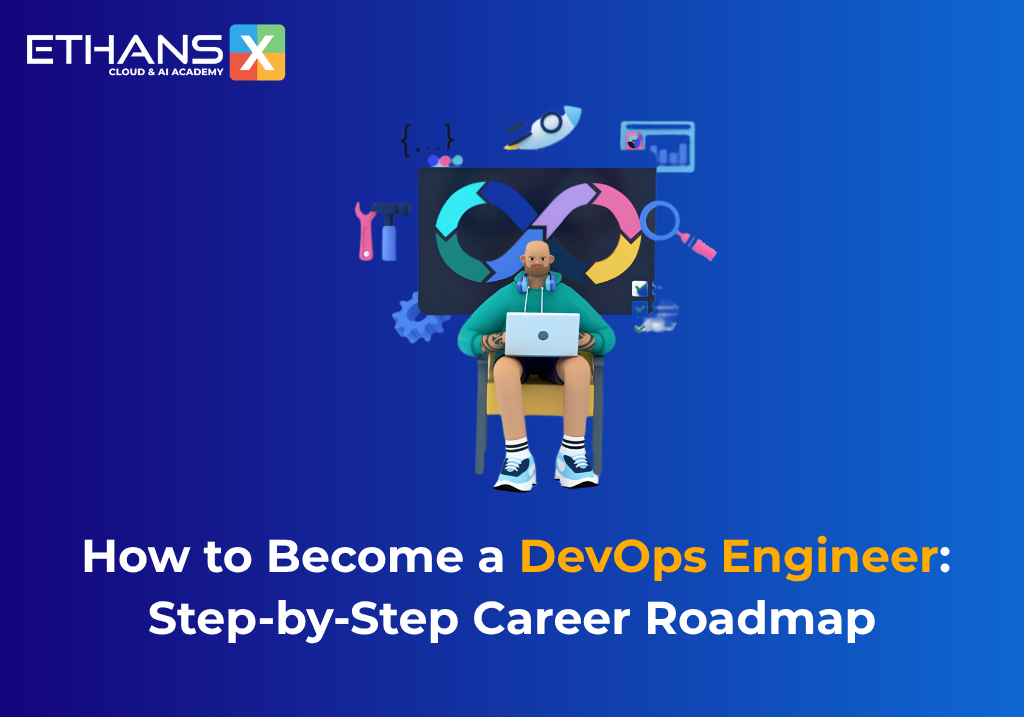
Software development is no longer about just writing great code. Today, companies hire candidates who can do more than simply write code. They also need professionals who can help the development and operations team work collaboratively, automate repetitive processes, deploy applications faster, and ensure system reliability. Such a role is called a DevOps Engineer.
DevOps engineering is an exciting path into the IT industry for everyone, whether a graduate, a working professional, or even someone from a non-programming background. While that’s true and understood, many of you may wonder where to begin and how to become a DevOps Engineer.
An structured way to enter the DevOps domain is by pursuing a DevOps course in Pune. The course is designed to help you embark on a structured, step-by-step career roadmap to achieving your goal. Here’s a blog that provides an overview of the DevOps engineering roadmap for learners from different backgrounds.
Is DevOps a Good Career in 2026?
Yes, it is. In 2026, most companies are moving to multi-cloud environments, microservices architectures, and automated releases. What was once considered a luxury confined to the big players is now becoming a business necessity for every organization, whether a startup or a global enterprise.
Therefore, the first reason why DevOps is a good career is its extensive demand, across multiple tech hubs, including Pune’s major IT hubs such as Hinjawadi, Kharadi, Kalyani Nagar, Magarpatta, etc.
The next factor is DevOps engineer salary in India. DevOps offers lucrative salaries. For example, entry-level DevOps roles command competitive packages of up to ₹6 LPA*. Seasoned players can get ₹18–30+ LPA*. However, salaries vary based on the employer’s paying capacity, projects available, your experience, expertise, and portfolio.
Additionally, as DevOps touches infrastructure, security, and software deployment, you can tap into career opportunities across various sectors, some of which include healthcare, finance, SaaS, retail, and eCommerce.
DevOps Engineer Roadmap After Graduation
As a recent IT, engineering, or computer science graduate, here’s a short roadmap you can follow to stand out from the competition.
- Step 1: Strengthen basic programming fundamentals (Python or Go) and Linux systems.
- Step 2: Gain hands-on practice with AWS fundamentals (EC2, S3, IAM).
- Step 3: Learn Docker and write Dockerfiles for basic web applications.
- Step 4: Build automated CI/CD pipelines on GitHub Actions to deploy sample applications.
- Step 5: Demonstrate your projects on GitHub to showcase real-world competence to your prospective recruiters.
DevOps Roadmap After Python
Knowing Python before becoming a DevOps Engineer is an advantage. The roadmap to becoming one after Python can include:
- Automate OS Tasks: Use Python scripts instead of manual commands to interact with the Linux file system, automate log parsing, and make API calls.
- Master Cloud SDKs: Learn Boto3 (the AWS SDK for Python) to programmatically create, stop, and configure cloud resources.
- Configuration Management: Move into Ansible to write playbooks that manage configuration at scale.
- Testing and Scripting: Use Python for automated testing in your CI/CD pipelines before code reaches production.
DevOps Roadmap After AWS
AWS certification is not a must to start with DevOps. However, if you’ve already completed AWS, you can join DevOps classes in Pune after completing AWS certification such as Solutions Architect Associate and follow the roadmap below.
- Infrastructure as Code (IaC): Move from manually clicking the AWS Console to writing declarative code with Terraform.
- Container Services: Go beyond EC2 instances to Docker containers and cloud-managed Kubernetes (AWS EKS).
- AWS Native DevOps Tools: Master AWS CodeDeploy, CodePipeline, CodeBuild, and CloudWatch.
- Observability: Integrate Prometheus and Grafana or AWS CloudWatch to monitor the system live and analyze logs.
DevOps Roadmap for Non-Programmers
You can become a DevOps specialist even if you don’t have a programming background. Here’s how you can become one.
- Focus on Scripting over Deep Algorithms: You don’t need to solve complex problems. Instead, initially, you can focus on writing simple automation scripts in Bash or Python.
- Master YAML and Configuration Files: Learn configuration languages such as YAML and JSON rather than object-oriented application code.
- Leverage Systems and Support Experience: If you have an IT support, QA testing, or sysadmin background, you can utilize your understanding of operating systems, networking, and troubleshooting.
How to Become a Cloud DevOps Engineer?
To become a Cloud DevOps Engineer, you must have a solid base across core pillars, including:
- Operating Systems and Linux: Terminal commands, shell scripting (Bash), file systems, user management, and process administration.
- Networking and Version Control: TCP/IP, HTTP/HTTPS, DNS, SSH, and master Git branching strategies (Git Flow, Pull Requests).
- Cloud Providers: AWS, Microsoft Azure, or GCP, computing, virtual private networks (VPC), storage, and IAM security.
- Containerization and Orchestration: Docker to package applications and Kubernetes to scale and manage containerized workloads.
- Continuous Integration and Continuous Delivery (CI/CD): Automated pipelines using Jenkins, GitHub Actions, or GitLab CI.
- IaC: Server provisioning with Terraform or Ansible.
Need a DevOps Engineer Roadmap Tailored Particularly for You?
Then, you need more than just a DevOps course in Pune. You need comprehensive support that covers various aspects such as learning, practicing, projects, and placement. This is where Ethans Tech steps in.
Our trusted DevOps course with placement in Pune includes creating a personalized roadmap to becoming a knowledgeable, in-demand DevOps Engineer. Our course and learning approach involve extensive practice and challenging internships to prepare you for industry challenges and opportunities through our DevOps roadmap with real projects.
So, call us at +91 95133 92223 to explore more about our DevOps course in Pune. We’ll be happy to be your learning partners.
Frequently Asked Questions
Is Python necessary for DevOps?
Although not advanced, you need working knowledge of basic Python or shell scripting for automation.
Which is the best DevOps training in Pune Kharadi?
The best DevOps training in Kharadi or anywhere else is one that provides abundant practical exposure to the latest tools and technologies, along with challenging internships and exposure to real-world challenges. Furthermore, factors such as job assistance and placement preparation through mock interviews, resume building, and portfolio development also matter.
DevOps vs Cloud Engineer career – what is the difference?
A DevOps Engineer automates the software development pipeline that runs on that infrastructure. On the other hand, a Cloud Engineer builds and manages cloud infrastructure.