Success Stories: How an AI Course Helped Professionals Land Top Jobs?
Success Stories of AI

AI is no longer a futuristic technology. For sure, it will be part of the future and continue evolving. However, it is happening right now. And the need to learn it is imminent! While bringing a generational shift across businesses, AI is also driving transformation in the job market, turning many old ones redundant and creating new ones. No wonder, we receive numerous aspirants who want to be at the vanguard of the future and learn what matters now and will stay relevant. They want to tap into remunerative and enticing career opportunities in the AI realm. And guess what, many of them who underwent AI training in Pune through us are already experiencing the exhilarating career journey! Here are the success stories from some of them. Yogesh Dornal, Research Analyst at Wynisco Pvt. Ltd Hi! I enrolled for Ethan’s Tech’s AI course to enhance my career prospects. I evaluated the course and found it competent, enrolling for it unhesitatingly. The course was well-conducted by experts who were prepared for every question we would ask and answered them convincingly and confidently. The course’s practical emphasis helped us master the application of AI in the real world. And here I am working as a Research analyst at Wynisco Pvt. Ltd. I thank Ethan’s Tech for helping me enhance my career prospects. Highly recommended.  Priyanshu Namdev, Research Analyst at Wynisco Pvt. Ltd Hey folks! AI caught my fancy ever since it became a routine across the business world. I wanted to do something in AI but couldn’t get through. All I needed was the right guidance and the best AI training in Pune. Enrolling in Ethan’s Tech proved the game-changer. The lucid way of explaining things, comprehensive course and vibrant learning atmosphere made learning so seamless. I now happily work as an AI product manager with Wynisco Pvt. Ltd. Ethan’s Tech’s dedicated placement cell helped me find the right opportunity and leverage it. Today, I have a respectable position in a reputed company and a handsome salary package! Thanks, Ethan’s Tech!  Swapnali Nalawade, Analyst Consultant at Wynisco Pvt. Ltd Hello aspirants! Here’s my success story in as few words as possible. Analysis was my forte for a long time. But it was time for me to take the leap. Ethan’s Tech’s AI course helped me take it. It acquainted me with every essential aspect of AI-driven analytics, including learning Python, R, etc. As a result, I could land a job as an analyst consultant with Wynisco Pvt. Ltd! Happy to be part of Ethan’s Tech family. Thanks a lot to the institute and every faculty member.  Rajesh Rangdal, Data Engineer at Exacuer I aspired to become a  Data Engineer when I enrolled in Ethan’s Tech’s AI course in Pune. But I was a little apprehensive. But I must say the trainers at Ethan’s Tech made the journey easier for me, explaining concepts simplistically, helping with practical sessions, and also preparing me for the interview. I would say Ethan’s Tech doesn’t help you anywhere but empowers you to carve your own road ahead. I did so and I am now working as a data engineer at Exacuer. All thanks to Ethan’s Tech! Abhishek Dhoble, AI Analyst at One Cloud BPO Ethan’s Tech is a place for every aspirant with a burning desire to carve a career in AI. My experience with this institute, I must say, was memorable. The learning environment, course competence, practical sessions, real-world examples and so much more (listing down everything isn’t possible) – everything was absolutely remarkable. I had an aspiration to become an AI analyst. Ethan’s Tech’s course helped me accomplish my goal. Thanks a lot! Feeling inspired? Then why think? You could be next amongst these. So, enroll with us and embark on your journey to an exciting, fruitful, and incredible career in AI.  Our artificial intelligence course in Pune is here to make it possible. Call us at +91 95133 92223 to explore more about our AI classes in Pune.

Why Generative AI Will Dominate Tech Jobs in 2025

Why Generative AI Will Dominate Tech Jobs in 2025

Generative AI, the technology behind groundbreaking tools like ChatGPT, DALL·E, and MidJourney, has captured the attention of industries worldwide. By enabling machines to create content, designs, and solutions that mimic human creativity, it has become a driving force in reshaping how businesses operate. But why will Generative AI dominate tech jobs in 2025? This blog explores its rapid adoption, applications, and the unparalleled opportunities it offers to tech professionals. What is Generative AI? Generative AI refers to artificial intelligence systems designed to generate new content, whether it’s text, images, videos, music, or even software code. Unlike traditional AI, which focuses on analyzing existing data to provide insights, generative AI goes a step further by creating entirely new outputs based on learned patterns. The Growing Importance of Generative AI in Tech 1. Revolutionizing Content Creation Generative AI tools are reshaping industries like marketing, media, and entertainment by automating content production. From crafting engaging ad copy to generating realistic images, these tools save time and resources while boosting creativity. 2. Accelerating Software Development With AI-powered coding assistants, software developers can write, debug, and optimize code faster than ever. Generative AI is also facilitating the development of customized software solutions, reducing the time-to-market for new products. 3. Enhancing User Experience From virtual assistants to chatbots, Generative AI creates interactive and personalized experiences for users. By understanding and mimicking human language, these systems enhance customer satisfaction across industries. 4. Driving Innovation Across Industries Generative AI is not confined to tech—it’s transforming healthcare, finance, education, and more. For instance: In healthcare, AI generates personalized treatment plans. In education, it creates adaptive learning modules tailored to individual students.   Why Generative AI Will Dominate Tech Jobs in 2025 1. Explosion of Data-Driven Applications The exponential growth of data requires professionals who can design and manage AI systems to harness it effectively. Generative AI’s ability to analyze and synthesize data makes it indispensable for solving complex problems. 2. Skill Gaps in the Workforce With Generative AI evolving rapidly, there’s a pressing need for trained professionals. Companies are competing to hire AI engineers, data scientists, and machine learning experts, making Generative AI expertise a highly lucrative skill. 3. Widespread Adoption Across Startups and Enterprises From Silicon Valley startups to Fortune 500 companies, businesses are integrating Generative AI into their operations. This widespread adoption is fueling demand for specialists to develop, deploy, and manage these systems. 4. Automation and Augmentation of Roles Generative AI doesn’t just replace tasks—it enhances them. For instance, it augments creative roles by providing suggestions or automating repetitive tasks, allowing professionals to focus on innovation and strategy. Top Careers in Generative AI by 2025 AI Research Scientist: Design and train advanced generative models. Machine Learning Engineer: Build scalable AI systems for real-world applications. AI Product Manager: Bridge the gap between AI technology and business needs. Data Scientist: Analyze data and improve AI model performance. AI Ethics Specialist: Ensure responsible and ethical use of Generative AI. Creative Technologist: Combine technical and creative skills to produce innovative content with AI. Skills You Need to Thrive in Generative AI Programming Knowledge: Proficiency in Python, R, or Java is essential for implementing AI models. Deep Learning Expertise: Understand neural networks, GANs, and transformers. Cloud Computing Skills: Learn how to deploy AI solutions on platforms like AWS, Azure, or Google Cloud. Data Management: Strong skills in data preprocessing and visualization are crucial. Ethics in AI: Awareness of ethical considerations and bias mitigation ensures responsible AI development. How to Get Started in Generative AI 1. Enroll in Specialized AI Courses Begin with certifications in machine learning and AI. Advanced programs like those offered by Ethans Tech provide hands-on experience and industry-relevant skills. 2. Work on Real-World Projects Participate in AI competitions, contribute to open-source projects, or collaborate on research papers to build your portfolio. 3. Stay Updated Follow industry blogs, attend AI conferences, and join communities to stay ahead of the curve. 4. Gain Practical Experience Opt for internships or freelance projects in Generative AI to get hands-on exposure to real-world applications. The Role of Ethans Tech in Generative AI Training At Ethans Tech, we offer comprehensive Generative AI training programs that empower professionals and students to thrive in this cutting-edge field. Our curriculum includes hands-on projects, industry-relevant tools, and guidance from expert trainers. With a strong focus on practical learning and placement support, Ethans Tech equips you with the skills needed to excel in the booming AI job market. Conclusion By 2025, Generative AI will dominate tech jobs, creating unparalleled opportunities for those with the right skills. As industries increasingly rely on AI for innovation and efficiency, professionals trained in Generative AI will find themselves at the forefront of this technological revolution. Whether you’re just starting your career or looking to upskill, investing in AI training today can position you as a leader in the tech-driven future.  

Best AI Course in Pune with Placement: A Detailed Guide

Best AI Course in Pune with Placement A Detailed Guide

The AI domain is one of the most booming domains nowadays and it has restructured businesses in many countries in the world. Pune is one of the big cities for AI education in India, with multiple courses not just providing theoretical knowledge of AI but also practical approach and experience along with placement. In this blog post, we will discuss the advantages of taking an AI course in Pune with placement assistance, the different top institutes providing such courses, and how joining an AI program can help you advance your career in 2025. Reasons to Learn AI Courses in Pune Pune has some of the most reputable universities in India, a booming tech industry, and a high volume of startups and more established companies working on AI and machine learning. The city is the ideal habitat for students and professionals wanting to learn from a wide variety of domains about AI. Here are some benefits for pursuing an AI course in Pune with placement assistance: Strong IT Ecosystem It is a big technology hub, with global behemoths like Infosys, Cognizant and Wipro, and a strong presence of AI startups. There are several such firms, which gives rise to a lot of employment opportunities for AI professionals. Diverse Course Options Be it a student or working professional, Pune has it all — Short term certifications, diplomas and degree programs in a variety of AI Courses, Pune affiliated institutes provide it all, for people who want to go for a career switch or start a new one, everyone has a chance. Industry-Experienced Trainers Industry experts with hands-on experience conduct AI courses in Pune. They not only teach the main concepts but also guide students in working on real world problems, making them employable. Placement Assistance Most of the AI institutes in Pune provide placement assistance in collaboration with popular companies. Students go on to earn salaries in AI careers including: Data Scientist, Machine Learning Engineer, AI Researcher and others, thanks to these partnerships. Top AI Institutes with Placement Assistance in Pune There are many institutes in Pune that provide high-quality AI courses, so students can learn the core concepts and also get job placement options. Here are a few of the Top Institutes: Ethans Tech – AI & Data Science Courses Advanced AI and Data Science Institute in Pune — Ethans Tech .Ethans Tech is one of the greatest institutes in Pune. It provides online and offline courses and emphasizes hands-on experience and project-based tasks. Students gain a fundamental understanding of AI technologies including machine learning, deep learning, NLP, and AI algorithms. Course Duration: 6-12 months Curriculum: Includes hands-on projects, AI tools, and techniques Placement Assistance: Yes, strong placement support with tie-ups with top companies Fees: Approximately INR 50,000 to 1,00,000 AI & Machine Learning Courses by UpGrad UpGrad partners with leading universities to create advanced AI and machine learning programs. Their AI course covers computer vision, neural networks, AI ethics, and much more. This makes the course the best fit for working professionals seeking to upskill in AI. Course Duration: 6-12 months (depending on the program) Curriculum: Online modules with interactive sessions, assignments, and capstone projects Placement Assistance: Placement services for graduates Fees: INR 1,50,000 to 3,00,000 AI and Machine Learning Program by Simplilearn The Simplilearn AI course aims to teach students the abilities to design and construct AI systems. Topics like data science, AI algorithms, and big data processing feature in their curriculum. It also contains Real-world Applications case studies and projects that provide practical experience. Course Duration: 3-6 months (depending on the mode) Curriculum: Focus on AI, machine learning, data analysis, and real-world projects Placement Assistance: Yes, they offer placement help through a dedicated career support team Fees: INR 60,000 to 1,20,000 Piyush Sir – AI Courses | Data Science Training Institute Piyush Sir’s institute of Pune is a reputed name for data science and AI training. The institute imparts both basic and professional AI training courses, which implement practical, coding, and industry-focused learning. It also offers placement assistance through its wide industry contacts. Course Duration: 3-6 months Curriculum: Machine learning, deep learning, AI ethics, AI programming Placement Assistance: Yes, strong industry tie-ups and placement support Fees: INR 45,000 to 90,000 AI and ML Certification — IIT-Pune (Indian Institute of Technology) For example, the IIT-Pune conducts specialized short-term certification programs in AI, which provide extensive knowledge of AI technologies. It includes machine learning, deep learning, neural networks, etc. 4. Guidance from Trainers: The professionals that educate students are not only trainers but also guide students to level up their career. Course Duration: 6 months to 1 year Curriculum: In-depth curriculum with practical projects Placement Assistance: Yes, the institute has a dedicated placement cell Fees: INR 70,000 to 1,50,000 What Will You Study in an AI Course in Pune? AI training institutes in Pune offer a variety of specialized topics to help students gain expertise in the AI domain. Here’s what you can expect to learn in a comprehensive AI course: Introduction to AI and Machine Learning Training on Specialized topics at AI training institutes in Pune Here’s what you might learn in a thorough course on AI: How AI and Machine Learning was structured If this is a lot of the first time, then get of AI and machine learning AI, ML, and deep learning: what’s the difference? Supervised, unsupervised, and reinforcement learning Types of machine learning AI Algorithms and Models Study of regression, classification, clustering, decision trees and other algorithms Neural Networks and Deep Learning Introduction to deep learning architectures (CNN, RNN, GAN, etc.) What the Deep Learning Models Do in their Case of Doing Object Detection, or Speech Recognition Other examples of AI applications include: Natural Language Processing (NLP) Text analysis, sentiment analysis, and chatbot building Familiarizing with NLP toolkits such as NLTK and spaCy AI Tools and Frameworks TensorFlow, Keras, Scikit-learn, PyTorch Relevant experience with AI development tools Exploring Bias, Fairness, and Transparency in AI Worries about choosing artificial morality over the real deal Advantages … Read more

Top AI Interview Questions and Expert Answers

Top AI Interview Questions and Answers

Have you recently completed an Artificial Intelligence course in Pune? Are you about to appear for your first AI job interview and wondering what questions the interview would ask? Then, here’s something that can help you. In this blog, we will discuss the top 12 AI interview questions and expert answers you can use as a base.  What is AI and its Applications? AI is one of the computer science streams, focused on creating systems capable of performing tasks that would otherwise require human intelligence. Some of these tasks include understanding natural language, recognizing speech, learning, making decisions, and learning. AI is used everywhere. For example, in customer support, AI is used in the form of chatbots and virtual assistants to enhance customer service. Another example is that of healthcare where AI is implemented for diagnostics, personalized treatment recommendations, and automation. What is Fuzzy Logic Fuzzy Logic helps you reason with uncertain or inaccurate information. It serves as an extension of classical logic and allows for partial truth, instead of conventional binary true or false. Thus, in fuzzy logic, it refers to prepositions potentially having a truth value between 0 and 1, representing the degree of truth. What is Deep Learning Based on? Deep learning is a subset of machine learning that focuses on developing artificial neural networks with multiple layers called deep neural networks. These networks help model sophisticated, hierarchical patterns and data representations. The inspiration behind deep learning is the structure and functioning of the human brain itself. What is the Difference Between Machine Learning (ML) and Deep Learning (DL)? ML is a subset of AI that learns from historical data and experiences. On the other hand, DL is a subset of ML and AI inspired by neurons and replicates the functioning of a human brain. Another difference is that of the type of data both deal with. ML deals with structured and semi-structured data. However, DL works with structured and unstructured data. Besides, ML can work with less data than DL and AI. However, DL requires more data than ML. What is Generative AI, and How Do they use it in Various Industries? It is an AI technology that can generate new content, including text, images, and music, depending on the patterns it has learned from the current data.  What is the Importance of Data Mining Data mining refers to discovering patterns, trends, and useful information for massive datasets with different algorithms, ML techniques, and statistical methods. One of the most important aspects and outcomes of data mining is the ability to make informed decisions. Thus, it is used in many industries, including retail (for example – predicting consumer behavior), healthcare (for example predicting patient outcomes, detecting frauds, etc.), finance (forecasting stock prices, determining credit ratings, and more). What is Artificial Narrow Intelligence (ANI) Also known as Weak AI, ANI are AI systems designed and trained to perform a particular or narrow range of tasks. These are highly specialized systems, capable of performing designated tasks with high precision and accuracy. Examples of these systems include voice assistants like Alexa, and Siri that classify data and respond to queries quickly. What is Data Binarizing? Binarizing data involves converting data features into vectors of binary numbers to increase the productivity of classifier algorithms. The technique of binarizing helps recognize shapes, characters, and objects. It simplifies differentiating between the object involved from the background it is found in. How Will You Ensure Your AI Model is Unbiased and Ethical? It involves extensive testing across diverse datasets, including ethical considerations, and continuous bias monitoring during the AI development process. Besides, transparency in how models make decisions also matters in ensuring ethical and unbiased AI models. What is AI Model Explainability? It is the capacity to comprehend and simplify decisions an AI model executes. It helps foster transparency, establish trust, and ensure that models help make decisions based on valid reasoning. What is Supervised And Unsupervised Learning? Supervised learning comprises a training model with a labeled dataset, where every training example is related to an output label. The model receives training to predict output-based or input data. However, unsupervised learning uses algorithms to analyze unlabeled data and discover patterns without human intervention. What is the Importance of TensorFlow in AI? TensorFlow is Google’s open-source platform that helps do high-performance numerical computations. It comprises a collection of workflows to develop and train models to make ML more efficient. What also makes TensorFlow useful is its customizability. Accordingly, it helps developers build exponential learning architectures and work on them to deliver the desired outcomes. Looking for an AI Course Near Pune? Choose Ethan’s Tech! Of course, the list includes many more questions. However, AI courses in Pune and the subsequent mock interviews usually cover all of them. And Ethan’s Tech precisely offers such AI classes in Pune. Our comprehensive AI course curriculum and holistic training help you become an AI professional the industry will want to hire. Our trainers conduct extensive mock interviews, preparing you for potential interview challenges and dealing with them. Call us at +91 95133 92223 if you want to unlock the doors to exciting career opportunities in AI.

Ethical AI and Bias Mitigation: Importance of the AI Practitioner Certificate

Importance of the AI Practitioner Certificate

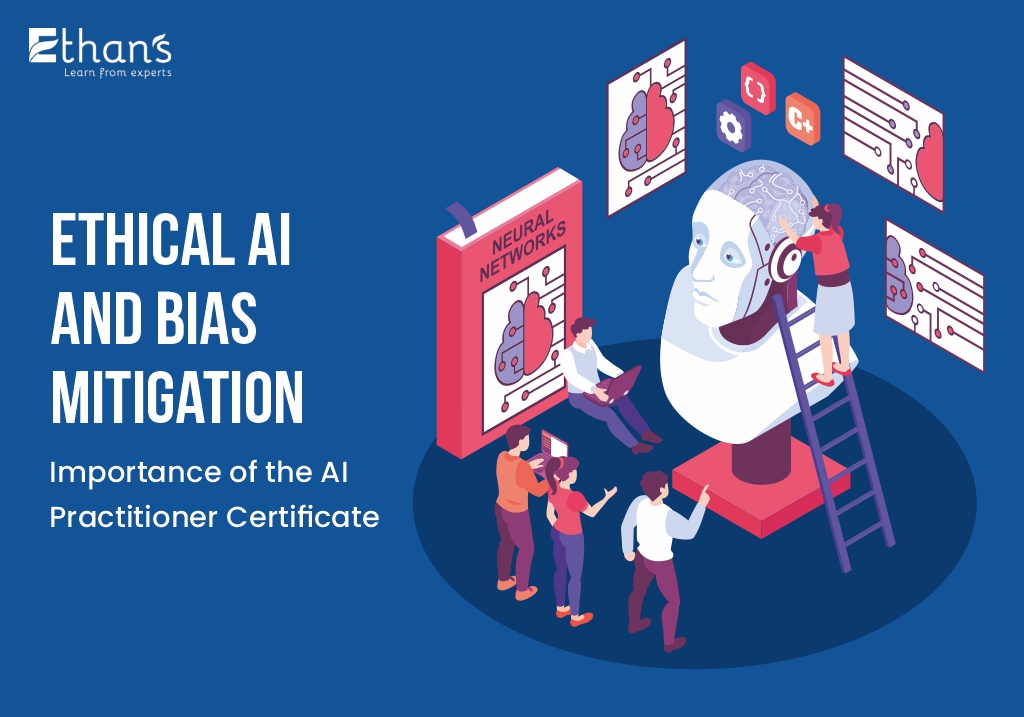
AI is undoubtedly one of the hottest technologies around. While evolving rapidly, it is also expanding, covering every aspect of business and our lives. And yes, the countless benefits it offers make it a crucial breakthrough of the 21st century. So, a promising career in AI has become a piece of the pie – everyone wants it! However, like every other technology, AI also has some serious concerns. As someone looking for an Artificial Intelligence course in Pune, you must stay aware of what they are as that’s another area where your role as an AI practitioner will come into play. What is Ethical AI and Why is it Vital? Ethical AI refers to guiding principles to help stakeholders develop and deploy transparent, fair, and accountable AI systems. It fundamentally ensures responsible development and use of AI. In other words, it also means taking up a humane, secure, safe, and sustainable approach to AI. Developing a robust AI ethical code ensures data privacy, prevents bias, and reduces environmental risks. Even for businesses, ethical AI is critical as it ensures value-based and ethical use of the technology. Furthermore, implementing ethical AI helps enhance client trust, strengthen brand reputation, and avoid legal concerns.  On a broader scale, ethical AI proves crucial for various reasons. In addition to the above factors, some include mitigating unintended outcomes and ensuring public trust and confidence in AI systems. One of the examples of unethical AI is using Generative AI chatbots to unintentionally regenerate copyrighted material without appropriate attribution. AI Bias and the Significance of Mitigating It In AI, bias is systematic errors or prejudices emerging from ML algorithms. These biases can result from different sources, including biased result interpretations, training data, or algorithms. AI systems rely upon historical data that might have social biases and prejudices. As AI practitioners, if you do not address them thoughtfully, they might lead to social indiscrimination, and inequality and create a potential social imbalance! Mitigating AI bias is thus crucial for the following reasons. Ensuring Fairness: Identifying and mitigating AI biases can help AI systems ensure equal treatment to every individual. It isn’t merely an ethical concern but a legal need. Avoiding Bias Reinforcement: AI systems can amplify existing social biases. However, bias mitigation helps prevent AI from doing it and promotes social inclusion and equality. Establishing Trust: Mitigating bias can help AI make more fair and unbiased recommendations, instilling confidence and trust amongst its users. Ensuring Ethical AI and Mitigating AI Bias – Vital Tips Using AI responsibly and mitigating bias can help the world at large, helping us make it a better place to live. While you will learn its technicalities during your Artificial Intelligence course in Pune, here are some generic tips for both. Use Diverse Data: Using diverse and representative datasets can help avoid biased AI outputs. You must also ensure the data reflects the socioeconomic, geographic, and demographic diversity of the target audience. Perform Bias Audits: Experts must conduct audit AI systems regularly to ensure algorithms ensure equality amongst all groups and proportionate benefits to each group. Furthermore, maintaining detailed logs of how AI systems make decisions can enable accountability in case of concerns. Ensure Inclusive Development: Include people from different backgrounds during the development and testing stages to prevent unconscious bias. Involve Human Oversight: AI supports human beings in different ways. However, we must maintain human oversight and review AI decisions, particularly across high-stake realms like finance or healthcare. Protect Sensitive Data: As a general practice, AI practitioners must also use strong encryption and anonymization techniques to safeguard user data. Keep Data Use to Minimal: Collect only necessary data and use it to build the AI model. Besides, avoid storing critical data for longer than required. Assess and Update AI Systems Regularly: Evaluate AI systems for performance, compliance, and fairness. Additionally, it is necessary to update AI systems regularly to fix bugs, address ethical concerns, and adapt to new regulations or societal changes. Perform Scenario Testing: Dealing with unintended results can be challenging, considering the potential damage they might cause! Accordingly, you must also test AI for various real-world scenarios to identify unintended consequences. AI is a technology developed by humans. Hence, it isn’t perfect. Nor can you expect it to be so even in the future! However, this is where you, as AI practitioners, step in. Expert AI practitioners perform various tasks and responsibilities. One of them is ensuring ethical AI and mitigating AI bias to every extent possible with an inclusive approach and implementing the best measures learned during the AI practitioner certification course. Here’s why the course is important.  Unlock the full potential of Generative AI by optimizing its efficiency! Learn how cutting-edge techniques can streamline processes and enhance outcomes for your business. Ready to revolutionize your AI strategy? Contact us today for expert guidance! Importance of the AI Practitioner Certification AI is slated to produce millions of new jobs soon. However, job opportunities merely do not define the significance of an AI practitioner certification. The importance of working as a professional AI expert extends to making vital contributions to the world.  The course helps you master the techniques, measures, practices, and strategies to maintain the AI code of ethics and mitigate bias while developing AI models and systems. It also helps you develop the approach it takes to build fair, transparent, and ethical AI systems that benefit society as much as businesses.  Final Words AI is a continuously evolving technology. Hence, although one cannot expect it to be perfect, one can expect it to improve with time and become more inclusive and meaningful with its thoughtfully designed models. As an AI practitioner, you will have a significant role to play here! As one of the leading technology institutes, Ethan’s Tech empowers you with its comprehensively designed Artificial Intelligence course in Pune. With a competent syllabus, seasoned trainers, and an experimental learning environment, Ethan’s Tech allows you to explore, discover, and learn AI more effectively. Call us at +91 95133 … Read more

Can AI replace Data Analysts?

Can AI replace data analysts?

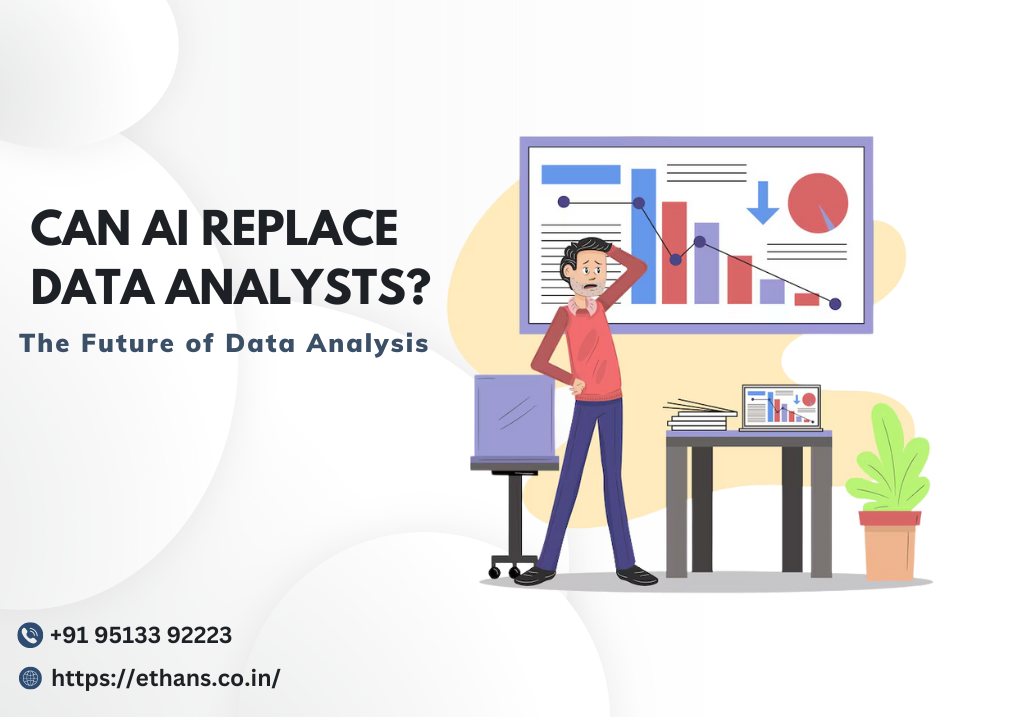
Have you ever wondered if AI could take over the jobs of data analysts? With the rapid rise of technology, it’s a question on many minds. Let’s dive in and see what the future might hold! Before discussing whether artificial intelligence (AI) will replace data analysts, it is important to understand what AI is. A technology known as artificial intelligence, or AI, is capable of carrying out any task that humans have ever completed. For example, language translation, speech recognition, cognitive processes, visual perception, and decision-making, among many more. It is hard not to value the impact of artificial intelligence on human life these days. Artificial intelligence has an impact on every field, industry, and sector. Data analysts are not left to shoulder the entire weight of these effects, which can be both beneficial and detrimental. Given the significance of records in a cutting-edge environment, it would no longer be justified to say that statistics analysts will remain unaffected. Shortly, AI is anticipated to continue having an impact on information evaluation. This is due to the reality that once facts become more varied, AI may be heavily utilized to investigate and examine them. Strong net connections, the enlargement of connected devices, and ever-faster laptop processing have all contributed to this. Each of these made a full-size contribution to the growth of data series and analysis. What role does AI play in this?  AI restricts human effort with the use of technology and computer science. In addition, data computations and programming analysis are now even easier to obtain than they were for data analysts. In a similar vein, AI’s insights, acquired from the evaluation of large statistics sets, are some distance more effective than an expert’s. Therefore, synthetic intelligence is being utilized in some capacity via every enterprise nowadays. Unquestionably, one advantage of AI is its capability to evaluate widespread amounts of information, spot styles, and provide effects in forms, reports, and papers that are easy for human beings to recognize. Can Humans Be Replaced by Technology? Going back hundreds of years to a time when people did everything by hand, this has always been a topic of debate. When they learned that technology might assist them, how would they have felt? But the actual world is not at all like that. If there are technical developments that shut one door, then those developments alone have given rise to additional options. There are a lot of examples that back up this assertion.  For example, digital publications took the role of printers, creating a chance for content writers. In a similar vein, mobile banking apps took the job of bank tellers, but professionals in the banking industry improved their abilities and became data analysts. But the most important query is: Will this trend continue?  Will AI increase opportunities while replacing data analysts?  Or will these two complement one another? How Do Data Analysts and Artificial Intelligence Work Together? Rather than debating whether AI will take the role of data analysts, we ought to focus on how AI can support them. Now let’s examine them. Data analysts may benefit greatly from AI as it gives them all the tools they need to swiftly and effectively evaluate large amounts of data. AI is also a great tool for finding patterns in otherwise unstructured data and extracting insightful information from it. Thanks to AI-driven automation, statistics analysts can also now recognize crucial obligations rather than performing tedious hard work all day. Errors have decreased once automation became used, producing more correct findings and results. Furthermore, AI provides a manner to recognize information without the requirement for earlier know-how or information in information analytics. Furthermore, fact analysts may also hire a plethora of AI gear to their benefit. What Impacts Might AI Have on  Data Analysts? Questions like “Which roles and obligations of a statistics analyst will the AI update?” need to be asked as opposed to focusing on whether or no longer AI will update data analysts. So permit’s tackle it from a distinctive angle. As a statistics analyst, you’ve got numerous obligations to fulfill. While some will be cognizant of static desires, others will do non-task-oriented tasks. Activities like acquiring datasets, employing tools to finish obligations, and reworking facts are all part of the static standards. Such individuals or jobs don’t demand a tremendous deal of domain knowledge or industrial acumen. It’s also more of a back-of-the-scenes process. These are the sorts of obligations that AI can with ease take. All of these jobs can be effortlessly finished by using quite a few AI tools, including Open AI’s code interpreter. All you need to do is publish the statistics and teach this AI technology to carry out the identical assignment as a statistics analyst. However, the probability of an AI replacing you on your function is a whole lot decreased if you are a facts analyst who is going above and beyond the call of obligation. You’ll be extra involved with the profitability and outcomes of your company, which can be things that AI can help with but can not do on its own. In summary, whether AI replaces you in your work as a data analyst will rely on the type of responsibilities you are managing. Artificial intelligence (AI) tools can quickly replace you if all you are doing is building dashboards without offering any insightful information.  But, there is no substitute if you build that dashboard and provide insightful analysis and forecasts on how the company might grow. For this reason, using generative AI tools like ChatGPT is essential if you want to increase your performance and efficiency when solving challenging SQL queries. AI tools may also be used to learn new things and increase your knowledge. What AI Restrictions Apply to Data Analysis? While artificial intelligence (AI) has several advantages for data processing, it also possesses significant drawbacks. The creation of codes and machine learning algorithms is the first restriction. A human brain and a data analyst are required to … Read more

Future scope of Artificial Intelligence in 2024

Future scope of Artificial Intelligence

Artificial Intelligence (AI) stands at the forefront of technological innovation, reshaping industries, revolutionizing processes, and redefining what’s possible. As we peer into the future, the scope of AI appears boundless, with transformative implications for businesses, society, and the human experience. In this comprehensive guide, we’ll delve into the future scope of AI, uncovering trends, opportunities, challenges, and considerations that lie ahead. Understanding the Evolution AI has come a long way since its inception, evolving from theoretical concepts to practical applications that permeate every aspect of our lives. From virtual assistants and recommendation systems to autonomous vehicles and medical diagnostics, AI-powered technologies have become ubiquitous, driving efficiency, productivity, and innovation across industries. Trends Shaping the Future Several key trends are shaping the future of AI, each presenting unique opportunities for businesses, researchers, and policymakers: Exponential Growth of Data: The proliferation of digital data generated by individuals, devices, and sensors is fueling the growth of AI, providing the raw material for training sophisticated machine learning models. As data volumes continue to explode, AI systems will become more powerful, accurate, and capable of addressing complex challenges. Advancements in Machine Learning: Breakthroughs in machine learning algorithms, architectures, and techniques are pushing the boundaries of AI capabilities. From deep learning and reinforcement learning to transfer learning and federated learning, researchers are continually refining and innovating machine learning methods to solve increasingly complex problems. AI Ethics and Governance: As AI becomes more pervasive in society, concerns about ethics, bias, transparency, and accountability are gaining prominence. Policymakers, industry leaders, and academics are grappling with thorny questions surrounding AI governance, seeking to establish guidelines, regulations, and standards to ensure responsible AI development and deployment. AI-powered Automation: AI-powered automation is transforming industries by streamlining workflows, optimizing processes, and augmenting human capabilities. From robotic process automation (RPA) and intelligent assistants to autonomous vehicles and industrial robots, AI-driven automation is reshaping the future of work, driving efficiency gains, and unlocking new opportunities for innovation. Opportunities on the Horizon The future scope of AI presents a myriad of opportunities for businesses, entrepreneurs, and society as a whole: Personalized Experiences: AI enables businesses to deliver personalized experiences tailored to individual preferences, behaviors, and needs. From personalized recommendations and targeted advertisements to customized products and services, AI-powered personalization drives customer engagement, satisfaction, and loyalty. Healthcare Transformation: In healthcare, AI holds the promise of revolutionizing diagnosis, treatment, and patient care. From medical imaging and drug discovery to remote monitoring and predictive analytics, AI-powered technologies have the potential to improve outcomes, reduce costs, and enhance access to quality healthcare services. Smart Cities and Sustainability: AI-driven solutions are powering the development of smart cities, enabling efficient resource allocation, traffic management, energy optimization, and environmental monitoring. By harnessing AI to tackle urban challenges, cities can become more sustainable, resilient, and livable for residents and future generations. Innovative Business Models: AI enables businesses to unlock new revenue streams, business models, and value propositions by leveraging data-driven insights and automation capabilities. Whether it’s predictive maintenance, subscription services, or outcome-based pricing, AI-powered innovations are driving business transformation and disruption across sectors. Challenges and Considerations Despite its immense potential, AI also presents several challenges and considerations that must be addressed: Ethical and Bias Concerns: AI systems can perpetuate biases and discrimination if not designed, trained, and deployed responsibly. Addressing ethical considerations such as fairness, accountability, transparency, and privacy is essential to building trust and mitigating harm in AI applications. Regulatory and Legal Frameworks: Policymakers face the challenge of crafting regulatory and legal frameworks that balance innovation and risk in the AI landscape. Establishing clear guidelines, standards, and oversight mechanisms can help ensure that AI development and deployment align with societal values and objectives. Workforce Displacement: AI-driven automation has the potential to disrupt labor markets and displace workers in certain industries and occupations. Retraining, reskilling, and lifelong learning initiatives are needed to equip individuals with the skills and competencies required to thrive in the AI-powered economy. Check the Blog of Can AI replace Data Analysts? Cybersecurity and Privacy Risks: AI systems are susceptible to cybersecurity threats, including data breaches, adversarial attacks, and manipulation. Strengthening cybersecurity measures, implementing robust encryption protocols, and fostering a culture of data privacy and security are critical to safeguarding AI-powered systems and infrastructure. Conclusion In conclusion, the future scope of artificial intelligence is vast and transformative, offering unprecedented opportunities to enhance human potential, solve complex problems, and shape the future of society. By embracing key trends such as exponential data growth, advancements in machine learning, AI ethics and governance, and AI-powered automation, businesses, researchers, and policymakers can unlock new frontiers of innovation, prosperity, and well-being. With careful consideration of ethical, legal, and societal implications, we can harness the full potential of AI to create a future that is equitable, inclusive, and sustainable for all. Expand the limitless possibilities in the future scope of Artificial Intelligence. Ethans Tech offers comprehensive AI training programs, equipping you with cutting-edge skills for success. Contact us now to embark on a transformative journey and unlock rewarding career opportunities in this dynamic field.

Delving into the Depths: A Thorough Exploration of ChatGPT and the Essential Framework of Artificial Intelligence

Exploration of ChatGPT and Artificial Intelligence

Artificial Intelligence (AI) has witnessed remarkable progress since its inception in the 1950s, with the evolution of machine learning playing a crucial role in propelling its growth. The dynamic landscape of AI has ushered in significant transformations,giving rise to increasingly sophisticated AI models that emulate human-like capabilities. One standout model garnering recent attention is OpenAI’s ChatGPT—alanguage-basedAI that has made a substantial impact in the AI community. This blog post aims to intricately explore the technology powering ChatGPT, offering a comprehensive examination of its fundamental concepts. ChatGPT:How OpenAI’s AI Language Model Creates Human-Like Text ChatGPT, created by OpenAI, operates as an AI language model employing deep learning to produce text resembling human language. It relies on the transformer architecture, a successful neural network design widely used in various Natural Language Processing (NLP) tasks. Throughextensivetrainingonavastdatasetoftext, ChatGPT is designed to generate language that is coherent, contextually suitable, and sounds natural.   How ChatGPT Works ChatGPT uses three important technologies to understand and generate text: Natural Language Processing (NLP), Machine Learning, and Deep Learning. These technologies help ChatGPT learn from data and create text that sounds like humans. Making Language Easier with Natural LanguageProcessing (NLP) NLP is a way for ChatGPT to understand and use human language. It helpsthemodel create text that makes sense and sounds natural. ChatGPT uses techniques like tokenization, named entity recognition, sentiment analysis, and part-of-speech tagging to make its language more human-like. Learning from Data: Machine Learning in Action Machine Learning is like teaching ChatGPT to predict words based on what it learned from lots of text data. The model learns patterns from previous words in sentences to guess what the next word should be. Getting Smarter with Deep Learning Deep Learning is like training ChatGPT’s brain with a lot of information. It helps the model’s transformer architecture, a special way of learning, to understand and create text that is not only clear but also flows naturally. ChatGPTArchitectureOverview ChatGPT uses a special architecture called the transformer, which is like itsbrain.This idea came from a paper called “Attention is All You Need” by Vaswani and others. The transformer helps ChatGPT understand and work with sequences of data, like text. To bring this idea to life, ChatGPT uses a tool called PyTorch, a machine learning library. Breaking Down the Parts of ChatGPT The Starter Layer: Input Layer This layer is like ChatGPT’s eyes. It takes in the text and turns it into numbers. This process, called tokenization, splits the text into smaller parts (tokens, like words) and gives each part a special number called a token ID. The Converter Layer: EmbeddingLayer Now, each token gets transformed into a fancy set of numbers, sort of like a secret code. These special numbers, called embeddings, represent what the words mean. The Worker Layers: Transformer Blocks Think of these as ChatGPT’s workers. They process the sequence of tokens to understand the text. Each worker (Transformer block) has two maintools:aMulti-Head Attention mechanism and a Feed-Forward neural network. Multi-Head Attention Mechanism: The Attention Checker This tool helps ChatGPT focus on important words in the text. It checks each word’s importance by comparing them, like giving scores. Feed-Forward Neural Network: The Decision Maker This network helps ChatGPT make sense oftheinformation.Ittransformstheinputina smart way, combining it with attention scores to create the final understanding of the text.     Putting It All Together: How ChatGPT Thinks ChatGPT uses many Transformer blocks in a row, letting it think in multiple rounds. The final step predicts what comes next in the text by looking at the whole sequence of words. It’s like ChatGPT saying, “Based on everything I’ve seen, here’s what I think should come next.” In simpler terms, ChatGPT reads, understands, and predicts by breaking down the text into smaller pieces, figuring out what’s important, and making smart decisions to create meaningful responses. Understanding Tokenization in ChatGPT Tokenization is like breaking down a sentence into smaller parts, called tokens. In ChatGPT, tokens are usually words or smaller parts of words, and each token gets a special number called a token ID. This process is crucial because it turns words into numbers, making it easier for ChatGPT’s brain to understand and work with them. Why Tokens Matter in ChatGPT? Token ID Magic in the Embedding Layer The first step is giving each word or part a number. These numbers are likecodesthat ChatGPT understands. The model then uses these token IDs to create a special set of numbers, or embeddings, for each token. These embeddings capture what the words mean. Tokens Guide the Transformer Blocks The tokens and their embeddings guide ChatGPT’s understanding of the text. Think of tokens as puzzle pieces, and embeddings as the clues that help ChatGPT put the puzzle together. The model uses this information in the Transformer blocks to make smart predictions. Choosing the Right Tokens for ChatGPT The kind of tokens chosen and how they are split can really impact how well ChatGPT works. There are two common methods: Word-BasedTokenization:Eachtokenrepresentsawhole Subword-Based Tokenization: Tokens represent smaller parts of words or evencharacters.Thismethod,likeinChatGPT,ishelpfulforunderstandingrare or unusual words that might not fit well with word-based tokenization. How ChatGPT Learns: The Training Journey ChatGPT’strainingisacomplicatedprocesswithtwomainsteps:pre-trainingand fine-tuning. The goal is to help the model get really good at generating therightkindof text. Step 1: Getting the Basics Right – Pre-training In the first phase, called pre-training, ChatGPT learns about language and context by studyingabunchoftext.Imagineit’sliketeachingChatGPTtopredictthenextwordina sentence. This phase uses a big chunk of text data to help the model understand how words fit together. The special codes called token embeddings are learned during this phase. Step 2: Specializing for the Job – Fine-tuning After pre-training, ChatGPT goes through fine-tuning. This is like giving it extra training on a specific task, like answering questions or creating text. The idea is to adjust the model for the particular job and fine-tune its settings so it produces the right kind of results.   Keys to Success in Fine-tuning: Choosing the Right Start and Settings 1. Picking the Right Starting Point – The Prompt ChatGPTneedsthe right information to get started, … Read more

Artificial Intelligence (AI) vs. Machine Learning

Artificial Intelligence (AI) vs. Machine Learning

Artificial Intelligence (AI) and Machine Learning have become buzzwords in the technology and business world. These cutting-edge technologies have reshaped various industries and have the potential to revolutionize the way we live and work. In this article, we will delve into the world of AI and Machine Learning, understand their fundamental differences, explore their applications, and examine their advantages and limitations. What is Artificial Intelligence (AI)? Artificial Intelligence, often abbreviated as AI, refers to the simulation of human intelligence in machines that are programmed to think, learn, and perform tasks without explicit human intervention. The goal of AI is to create systems that can reason, problem-solve, and mimic human cognitive abilities. Concept of Machine Learning Machine Learning is a subset of AI that focuses on the development of algorithms and statistical models, allowing computers to learn from data and improve their performance over time. Unlike traditional programming, where explicit instructions are provided, Machine Learning enables machines to learn and make predictions or decisions based on patterns in the data. AI vs. Machine Learning: A Comparative Analysis Definitions The primary distinction between AI and Machine Learning lies in their definitions. AI refers to the broader concept of machines exhibiting human-like intelligence, while Machine Learning is a specific approach that empowers machines to learn from experience. Scope and Applications AI has a wider scope, encompassing various techniques such as natural language processing, computer vision, and robotics. It finds applications in virtual assistants, autonomous vehicles, healthcare, finance, and more. On the other hand, Machine Learning is applied in data analysis, pattern recognition, recommendation systems, and fraud detection, among others. Learning Process In AI, the emphasis is on developing intelligent systems capable of performing tasks independently. In contrast, Machine Learning focuses on training algorithms on data, enabling them to improve their performance through experience. Human Intervention AI systems can be rule-based or self-learning. Some AI systems require human intervention to make decisions in uncertain situations, while others can adapt on their own. In Machine Learning, humans play a crucial role in the training phase, providing data and fine-tuning the algorithms. Examples of AI and Machine Learning Applications AI is evident in popular applications like Apple’s Siri and Google’s Assistant, self-driving cars, and advanced chatbots. Machine Learning finds use in personalized recommendations on streaming platforms, image and speech recognition, and credit card fraud detection. Artificial Intelligence vs. Machine Learning Key Advantages of AI Efficiency: AI-powered systems can perform tasks faster and with greater accuracy, reducing human errors. Automation: AI enables the automation of repetitive tasks, freeing up human resources for more strategic endeavors. Decision Making: AI systems can analyze vast amounts of data to make informed decisions quickly. Key Advantages of Machine Learning Predictive Capabilities: Machine Learning models can predict outcomes based on historical data, aiding businesses in making data-driven decisions. Continuous Improvement: Machine Learning algorithms can refine their predictions and performance with new data, leading to continuous improvement. Limitations of AI Lack of Empathy: AI lacks human emotions, making it challenging to comprehend emotional nuances in certain contexts. Cost and Complexity: Developing sophisticated AI systems can be expensive and complex, limiting accessibility. Limitations of Machine Learning Data Dependency: Machine Learning models heavily rely on data quality and quantity, leading to biased results if the data is skewed. Overfitting: Machine Learning models may perform well on training data but struggle with unseen data due to overfitting. Future Prospects and Developments The future of Artificial Intelligence and Machine Learning holds tremendous potential. Advancements in deep learning, natural language processing, and robotics are expected to drive innovation in various industries, transforming how we interact with technology. Ethical Considerations in AI and Machine Learning As AI and Machine Learning become more pervasive, ethical considerations surrounding data privacy, algorithmic bias, and job displacement need careful attention. Striking a balance between innovation and ethical practices is crucial for a sustainable future. Conclusion In conclusion, AI and Machine Learning are both transformative technologies, but they have distinct roles and applications. While AI seeks to build intelligent systems that can mimic human intelligence, Machine Learning focuses on creating algorithms that learn from data. Both technologies have their advantages and limitations, and their growth will continue to shape our future.

Boost Sales Performance in Salesforce with AI

Boost Sales Performance in Salesforce with AI

Artificial Intelligence (AI) has revolutionized various industries, and the realm of customer relationship management (CRM) is no exception. Salesforce CRM, a widely used platform for managing customer interactions and sales processes, can greatly benefit from leveraging AI technologies. By incorporating AI into Salesforce CRM, businesses can enhance their sales performance, improve customer engagement, and drive revenue growth. In this article, we will explore how artificial intelligence can be leveraged to boost sales performance in Salesforce CRM. Introduction to Salesforce CRM Salesforce CRM is a comprehensive platform that helps businesses manage their customer relationships, sales pipelines, and marketing campaigns. It provides a centralized database for storing customer information, tracking interactions, and analyzing sales data. With its robust features and intuitive interface, Salesforce CRM enables sales teams to streamline their processes, improve productivity, and drive revenue growth. Artificial Intelligence is transforming the way businesses operate and make decisions. In the context of Salesforce CRM, AI can analyze vast amounts of customer data, uncover patterns and insights, and make intelligent recommendations. By leveraging AI capabilities, businesses can gain a competitive edge in the market and deliver personalized experiences to their customers. AI-Driven Sales Forecasting Accurate sales forecasting is crucial for businesses to plan their resources effectively and set realistic targets. AI can analyze historical sales data, market trends, and other relevant factors to provide accurate sales forecasts. By leveraging AI-driven sales forecasting in Salesforce CRM, businesses can make data-backed decisions, optimize their sales strategies, and achieve better revenue predictability. Intelligent Lead Generation Identifying potential leads and nurturing them through the sales funnel is a vital aspect of any business. AI can analyze customer profiles, online behavior, and past interactions to identify high-quality leads. By leveraging AI-powered lead generation in Salesforce CRM, businesses can automate lead scoring, prioritize leads with the highest conversion potential, and optimize their sales efforts. Personalized Sales Recommendations Every customer has unique preferences and needs. AI can analyze customer data, such as purchase history and browsing behavior, to generate personalized sales recommendations. By leveraging AI-driven sales recommendations in Salesforce CRM, businesses can enhance cross-selling and upselling opportunities, increase customer satisfaction, and drive repeat purchases. Streamlined Sales Processes Salesforce CRM offers various automation features, and when combined with AI capabilities, it can further streamline sales processes. AI can automate routine tasks, such as data entry and lead assignment, allowing sales representatives to focus on building relationships and closing deals. By leveraging AI-driven automation in Salesforce CRM, businesses can improve sales efficiency, reduce manual errors, and accelerate the sales cycle. Enhanced Customer Engagement Effective customer engagement is crucial for building strong relationships and driving customer loyalty. AI can analyze customer interactions across multiple channels, such as emails, social media, and live chat, to provide personalized responses and recommendations. By leveraging AI-powered customer engagement in Salesforce CRM, businesses can deliver timely and relevant communication, enhance customer satisfaction, and increase brand loyalty. Improved Sales Performance Analytics Measuring and analyzing sales performance is essential for identifying areas of improvement and optimizing sales strategies. AI can analyze sales data, identify trends and patterns, and generate actionable insights. By leveraging AI-driven sales performance analytics in Salesforce CRM, businesses can track key performance indicators, measure the effectiveness of sales initiatives, and make data-driven decisions to drive better results. Integrating AI into Salesforce CRM Integrating AI into Salesforce CRM involves leveraging AI technologies, such as machine learning and natural language processing, and integrating them with the existing CRM infrastructure. Salesforce provides various AI-powered solutions and tools, such as Einstein Analytics and Einstein Lead Scoring, that can be seamlessly integrated into the CRM platform. By adopting these AI solutions, businesses can unlock the full potential of their Salesforce CRM and maximize sales performance. Challenges and Considerations While AI offers significant benefits, there are also challenges and considerations to keep in mind. Businesses need to ensure data privacy and security when leveraging AI in Salesforce CRM. They should also invest in proper training and change management to help sales teams adapt to AI-powered workflows. Additionally, it’s important to have a clear strategy and roadmap for implementing AI in Salesforce CRM to avoid potential pitfalls and maximize ROI. Future Trends in AI-Powered CRM The field of AI-powered CRM is constantly evolving, and several trends are shaping its future. Natural language processing and voice recognition are becoming more sophisticated, enabling voice-based interactions and conversational AI in Salesforce CRM. AI-powered chatbots and virtual assistants are also gaining prominence, providing personalized support and improving customer experiences. As technology advances, AI will continue to play a vital role in transforming the sales landscape and driving business growth. Conclusion Leveraging artificial intelligence in Salesforce CRM can significantly boost sales performance and enhance customer engagement. By utilizing AI-driven capabilities such as sales forecasting, lead generation, personalized recommendations, and streamlined processes, businesses can drive revenue growth, improve productivity, and deliver exceptional customer experiences. As AI continues to advance, integrating it into Salesforce CRM will become increasingly vital for businesses aiming to stay competitive in the dynamic marketplace.