Data Science in Business: How Companies are Using Data to Drive Decisions?

best data science course in Pune

As companies become more data-driven, instinct- or judgment-based decision-making is turning redundant. Companies are increasingly relying on data to make favorable choices and do what’s right for their business. However, with billions of gigabytes of data generated daily, merely having data on hand doesn’t work. Businesses must transform raw data into useful insights that provide a clear picture of the situation under review and make the right decisions.  This is where data science and data scientists step in. As someone looking for the best data science course in Pune, you must know the crucial role your data science capabilities will play in your employer’s business. Accordingly, let’s explore how data science helps companies leverage data to make the right decisions. What is Data Science? Data science is a field that focuses on deriving valuable insights, patterns, and knowledge from data. It uses various techniques like mathematics, statistics, computer science, and domain-specific knowledge to analyze and interpret complex data sets. The process involves collecting and cleaning data, performing exploratory data analysis, modeling, evaluating, interpreting data, and communicating the findings to the relevant stakeholders. For example, a retail outlet can use data science and analyze datasets to identify repeat customers and their buying frequency. How Data Science Aids in Informed Decision-Making? Here’s how data science supports businesses of varying sizes in making educated and appropriate decisions. Data Collection and Processing Businesses generate data from various sources. For instance, let’s say lead generation data. A company running lead-gen campaigns will generate data from different sources like social media, emails, phone calls, etc. Analyzing this data is important to assess lead quality, value, and sales conversion potential.  Data scientists play a role here by gathering data from these sources and cleaning them to achieve a certain level of accuracy and consistency. They then structure the raw data to transform it into usable formats, allowing for deeper and more comprehensive analysis. The company would then be able to determine which leads to focus on and chase for conversion. Identifying Patterns and Trends Most businesses in the 21st century are trend-driven. Let’s take the example of real estate. Trends in this space keep evolving. For example, let’s say a realtor wants to know the current market demands based on the trend – whether customers these days look for 3 BHKs, 2 BHKs, or are 1 BHKs more in demand? Such a business can leverage exploratory data analysis (EDA) to identify significant trends, correlations, and patterns in historical data. Insights from this exercise help companies understand factors impacting performance, client preferences, and overall market situation. Predictive Analytics Knowing what the future holds in store excites everyone. Of course, no technology or technique can predict accurately. However, achieving near accuracy is possible with quality data. Data science uses statistical modeling, machine learning, and AI to create predictive models that forecast outcomes. For instance, it can help an automobile dealer forecast sales, customer churn, or demand, enabling the decision-makers to prepare for situations and proactive adjustments. Segmentation and Personalization Segmentation and personalization play a significant role in the modern-day business environment. Instead of casting a wider net, companies spearfish so that they focus on what’s important for their business. Data science helps here. Data scientists segment target audience data helping a company focus only on audiences that matter. As a business, when you know who to target, you can tailor communication leading to personalized experiences, enhanced customer satisfaction, and increased loyalty via custom marketing, specific product recommendations, or support. Operational Optimization With time, businesses must evolve and drive improvements in their processes. For example, a manufacturing company can optimize its inventory workflows to make inventory management more efficient and cost-effective. Data science can help gather data from various sources and clean it to enable analysis that lets us derive vital insights into inventory bottlenecks, operational flaws, redundant workflows, tactical inefficiencies, etc. Overall, it can help the company reduce costs and manage its inventory more accurately and efficiently. Better Decision-Making with Simplified Presentation As a data scientist, you know and understand every aspect of data. However, to most, particularly those from a non-technical background, like your stakeholders, unstructured data or insights will be incomprehensible. Therefore, data science also involves providing dashboards and data visualizations to present data lucidly and drive informed decision-making. Summing it Up! Data is the new fuel that drives decisions and propels a company’s growth. Data science and data scientists help companies step closer to these objectives. No wonder they perpetually remain in great demand worldwide and across every domain! However, data science demands professional training, possible only when you join the best data science institutes in Hyderabad like Ethan’s Tech.  As a technology training institute, we are committed to building great careers and empowering the industry with qualified talent. We offer various data training programs, including a data science course for beginners that helps you begin your journey in the ever-expanding cosmos of data. Call us at +91 95133 92223 to explore more about our data science and related courses in Hyderabad.

Data Analyst vs Data Scientist

Data Analyst vs Data Scientist Course

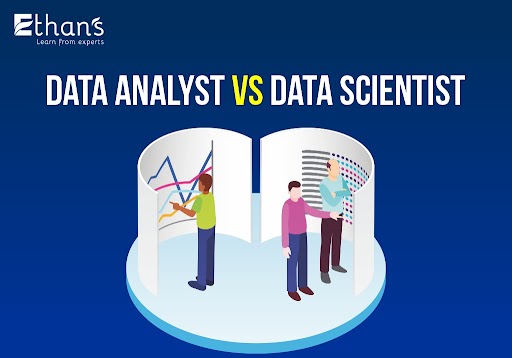
Often used interchangeably, data analyst and data scientist are two different terms and career streams with unique importance. Of course, both deal with data – a priceless asset for every business in the modern context. However, they contribute in different ways to help businesses harness the power of data and drive meaningful and actionable insights from it.  As a fresh technology graduate or an experienced professional looking for a data analyst course in Pune or data science classes in Pune, this blog is for you. It highlights some differences between data analysts and data scientists to strengthen the basic concepts and make an informed career choice. Who is a Data Analyst? A data analyst gathers, processes, and interprets data to help companies make informed decisions. Their role usually involves, Gathering data from different sources like databases, spreadsheets, etc. Cleaning the data to ensure accuracy and removing errors or inconsistencies. Analyzing data with Python, R, Excel, SQL, or other specialized software. Presenting findings through graphs, charts, and dashboards through Power BI, Tableau, etc., to make it clear, straightforward, and understandable. Preparing reports and presentations summarizing the insights and actionable recommendations based on the analysis. Data analysts closely work with other teams and departments, including marketing, finance, HR, operations, etc., as each generates data and requires accurate analysis. Example: Retail is a highly data-driven sector that evolves continuously and adapts to changing consumer needs and demands. Data analysts help retailers analyze data concerning sales, customer behavior, preferences, inventory statistics, market trends, etc. Their role extends to analyzing data to track sales performance, make revenue forecasts, segment customers, create personalized marketing strategies, provide data to optimize inventory levels, perform competitive pricing analysis, etc.  Who is a Data Scientist? A data scientist uses various scientific methods, algorithms, processes, and systems to extract insights from structured and unstructured data. Their expertise includes programming, mathematics, statistics, and domain knowledge to analyze massive datasets, identify patterns, and develop complex problem-solving models. Data analysts handle various responsibilities while performing their core jobs. These include, Gathering relevant data from multiple and diverse sources. Preparing the data by cleaning, organizing, and formatting it for analysis. Analyzing the data initially to understand its structure and explore hidden trends and patterns. Using statistical techniques and ML algorithms to build predictive models or data-driven insights for the business. Evaluating the model’s accuracy and performance and refining them. Creating visual representations of the data through graphs and dashboards Assisting companies in making informed decisions concerning product launches, strategies, marketing, etc., based on data-driven insights. Example: In the healthcare sector, data scientists leverage data to enhance patient outcomes, streamline operations, and improve the decision-making process. Their role covers various critical responsibilities like integrating, cleaning, and structuring datasets, ensuring safe data handling, building models to predict disease progression, predicting patient inflows, and much more. Data Analyst vs Data Scientist – Key Differences While you now have a basic understanding of what data analysts and data scientists do, let’s look at some key factors distinguishing them. Aspect Data Analyst Data Scientist Primary Responsibility Analyze data and provide insights to enable informed decision-making Solve complex problems with various advanced statistical and computational methods Routine Tasks Cleaning and organizing data, creating various reports, building dashboards and doing descriptive analytics  Developing algorithms, creating predictive models, performing A/B testing and conducting exploratory data analysis Tools Used Excel, Power BI, Google Analytics and SQL Hadoop, Python, R, Spark, SQL, Google Cloud Platform, Amazon Web Services and TensorFlow Programming Skills Needed Limited coding proficiency Extensive coding expertise with proficiency in R, Scala and Python Educational Background Bachelor’s degree in business, statistics, or a related stream Data analytics courses in Pune or other places Master’s or Ph.D. in data science, computer science, or other similar streams Should have attended data science classes in Pune or anywhere else Skills Required – Data Cleaning and Preparation – Data Visualization – Statistical Analysis – Solid Analytical Capabilities – SQL – Excel – Domain Knowledge – Problem-Solving – Communication – Attention to Detail – Continuous Learning – Machine Learning – Data Visualization – Data Cleaning and Preprocessing – Deep Learning – Experiment Designing – A/B Testing – Time Series Analysis – Communication – Presentation – Natural Language Processing (NLP) With data, the importance of data scientists and analysts will also increase. Speaking of the growth of data analytics, for example, it will surpass the 100-billion-dollar mark in the next 3-4 years. Even when it comes to data science, its platform market size fared between USD 95 billion – USD 98 billion last year. The growth prospects are as promising as they can be! Besides, since every sector generates data and wants to drive optimal value from it, data analysts and data scientists can seek employment in almost any sector. Of course, domain knowledge and understanding will play a crucial part while looking for opportunities. So now the question is from where will you learn the skills you need to become a data analyst or data scientist. The answer is Ethan’s Tech. We are one of Pune’s leading technology training institutes with a flair for and purpose of empowering the industry with comprehensively trained talent. Explore our course curriculum and learning methodologies if you’ve been looking for the terms data analytics or data science course near me. We will be happy to shape your career.

Data Science fees in Pune: What’s Included in the Course Cost?

Data Science fees in Pune

Data science has emerged as one of the most sought-after fields due to its diverse applications and lucrative career opportunities. In the present scenario, there are several courses available for data scientists in Pune varying in their degree of expertise, learning modes and course fees. Pune – the city, famous for education and IT centers now boasts a large number of institutions that offer data science courses. There are a few key players in this segment and one of the most popular of them is Ethans Tech which offers a comprehensive curriculum as well as industry-standard certification. In this article, we will see the factors that affect data science course fees in Pune which is why students love Ethans Tech.  Factors Influencing Data Science Course Fees in Pune  In case you are searching for data science courses in Pune, you are most likely going to realize that fees differ greatly from one institution to another. This disparity is influenced by several factors, including: 1. Course Duration and Depth  The length of the programme is also an important factor that influences data science course fees. Courses that take a few weeks or months to complete are usually cheaper than those that could take 6-12 months to complete. The longer ones provide more training, exposure and more advancement methods; hence they are more useful but costly.   2. Certification and Recognition  It is also important to note that certain courses are associated with certain universities or certifications that are recognized internationally which may attract an extra cost. Industry certifications from organizations like IIT or other global players like AWS or Microsoft bring more legitimacy to the course and the candidates’ employability. Ethans Tech is different from the competitors in terms of delivery of courses with the partnership with the E& ICT, IIT Guwahati and hence a clear value proposition to students and working professionals pursuing the programs to get globally accredited certifications.  3. Mode of Delivery Another major determinant of the fees is if the course is a traditional online course, an offline course or a blended course. E-learning tends to be cheaper than face-to-face learning seeing as there are no structures to put up for the classes to be held. Nonetheless, most learners have not relinquished on attending class physical lessons particularly those that include practical learning and exchanges with their peers. Ethans Tech is a hybrid institute of learning that means that the students can choose whether to be taught online or in normal classroom settings. 4. Faculty and Infrastructure The trainers and the facilities offered by an institution determines the course fees offered to the students. As far as the universities are concerned, the ones which have experienced faculty hailing from the industry, sophisticated laboratories and best-in-class infrastructures usually include hefty prices with their programs. The course delivery at Ethans Tech comes from trainers who are well-educated, and more to the point, they bring into the classroom the real-world experience of the industry, making it possible to justify the rather high cost of the training programs offered at the facility. 5. Employment Placement and Career Development Most organizations have a post-course job placement service that helps in resume creation, interviews, and recruitment. Tuition fees are also known to be higher for courses that promise job placements or courses that come with aggressive career services that students can access in the course of their studies. Ethans Tech is one of the best institutes focusing on the final placement of students to get placed in the top info technology companies. Data Science Course Fees: A General Overview The fees for data science courses in Pune can vary depending on the factors mentioned above. Here’s a general breakdown: Short-Term Courses: ₹25,000 to ₹50,000 Certification Courses: ₹50,000 to ₹1,00,000 Comprehensive Programs (6-12 months): ₹1,00,000 to ₹3,00,000 Courses with live projects, internships, and industry-driven curricula typically fall on the higher end of the spectrum. Courses offering affiliations or certifications from recognized institutions like E&ICT, IIT Guwahati, in partnership with Ethans Tech, also tend to charge more due to the added value. Conclusions Selecting the correct data science course is an important determinant towards having a successful career within this promising line. However, one must not overlook factors such as the quality of education, certification, faculty and placement opportunities while selecting a course. Ethans Tech is among the best stores students could find in Pune given that the majority of its electronics products are cheap but of high value.Thus, if you are thinking about doing a data science course in Pune, then Ethans Tech is a coaching institute that will provide you with a well-structured systematic data science course which is recognized and well-approved by the industries and has a promising career opportunity in the IT industries as well as in all other fields of sectors required to be spent while pursuing a good and demanding future.

Data Science classes in Pune for Freshers

Data science Classes in Pune for Freshers

Being one of the growing IT hubs in the world Pune has now proved to be one of the best places to start your data science careers. Being one of the leading cities in the country in offering data science classes in various intuitions, the city provides an appropriate market through which freshers can be trained and exposed to fit the market needs in the field. In this article, the following will be discussed: Freshers’ jobs and Job opportunities in Pune:  The Importance of Data Science in Today’s World Data science is an umbrella term encompassing concepts related to statistics, machine learning, and big data visualization to extract information from data. The skills one gets upon completing data science programs are universal and can be applied in fields such as financial services, the healthcare sector, technology, and retail. To the freshers, starting a career in data science is quite bright with many prospects for upgrades. Data science is transforming industries across the globe, making it one of the most impactful fields today. Data science classes are crucial for understanding and harnessing this power. Here’s why: Data-Driven Decisions: Businesses use data science to extract valuable insights, guiding strategic decisions and optimizing operations. Data science classes equip you with the skills to analyze data and drive these decisions effectively. Innovation: Data science fuels technological advancements and innovative solutions. By learning through data science classes, you gain the expertise to contribute to cutting-edge developments. Personalization: Companies personalize products and services using data insights, enhancing customer experiences. Data science classes teach you how to analyze customer data and apply it to create tailored solutions. Healthcare Advancements: Data science is pivotal in improving diagnostics and treatment plans. Enrolling in data science classes can prepare you to work on projects that advance medical research and patient care. Financial Strategies: The financial sector uses data science for risk management and investment strategies. Data science classes provide the tools to understand and apply financial models effectively. Policy Making: Governments utilize data science to inform policy decisions and manage resources. Learning data science can enable you to contribute to impactful public policies. What to Look for in Data Science Classes for Freshers Comprehensive Curriculum: A well-rounded curriculum is crucial for freshers. Look for courses that cover essential topics such as programming languages (Python, R), statistics, data wrangling, machine learning algorithms, and data visualization techniques. Additionally, practical experience through projects and real-world case studies is vital. Experienced Trainers: The quality of instruction can make a significant difference. Courses taught by industry experts or experienced professionals ensure that students receive up-to-date knowledge and insights. Hands-on Experience: Practical experience is key to understanding data science concepts. Courses that offer hands-on projects, internships, or real-world datasets provide valuable learning experiences. Certification and Placement Support: A recognized certification can enhance your credentials. Look for programs that offer certification and have strong placement support to help you secure a job post-completion. There are several reputed institutions in Pune offering data science courses specifically for freshers. Here’s a snapshot of some notable ones:  Top Institutions Offering Data Science Classes in Pune Ethan’s Tech: Ethan’s Tech has established the best reputation for data science classes. Their program is aimed to give the freshers comprehensive knowledge about data science itself, theoretical and practical parts included. All the material is covered in the curriculum, from Python programming and data analysis to machine learning. For the training solutions offered by the organization, the following factors make Ethan’s Tech stand out; They have highly experienced trainers, a detailed syllabus, and a strong infrastructure. They also provide certification from E&ICT, IIT Guwahati which brings a lot of value to the course. This makes it easier to produce students who are well-equipped to face real-life situations when they graduate from the institute. IIM Skills: Being one of the leading institutes that focuses on industry-style education, IIM Skills has a data science course that covers a wide range of issues. Their program consists of hands-on projects and the course caters for the freshers who wish to venture into the field. Simplilearn: Gone are the days when data science courses were limited to only a few weeks or months and consisted of online sessions only; Simplilearn offers a data science certification course which is quite extensive. It also has a nice course structure to ensure that the freshers learn about the data science concepts and uses as well. Why Choose Ethan’s Tech to enroll Data Science Classes? Among the many options available, Ethan’s Tech stands out for several reasons:  Industry-Relevant Curriculum: Ethan Tech offers its data science classes based on today’s market. The curriculum is kept current enabling the institute to incorporate the latest tools, techniques, and technologies. Expert Trainers: Most of the trainers at Ethan’s Tech are people with adequate experience in training, and they have worked in the industry for many years. It is for this reason that their knowledge helps the students to acquire factual knowledge and information on the specific field. E&ICT, IIT Guwahati Certification: Presently, Ethan’s Tech is therefore advantageous with the E&ICT, IIT Guwahati certification option. This prestigious certification optimizes the worth of the students’ resumes besides improving the employment opportunities of the graduates. Hands-on Training: It is operationalized practically through projects and real datasets through the institute. This practical orientation is beneficial in that it prepares the students to be able to solve real-life data science problems. Strong Placement Support: placement services offered with the same intensity at Ethan’s Tech enable students to get in touch with employers and get a job in a data science organization. Conclusion For freshers eager to dive into the world of data science, Pune offers a wealth of opportunities. With its array of institutions and specialized programs, students can find a course that aligns with their career goals. Ethan’s Tech, in particular, stands out as a leading choice due to its comprehensive curriculum, expert trainers, and the added advantage of E&ICT, IIT Guwahati certification. Whether you are just starting or looking … Read more

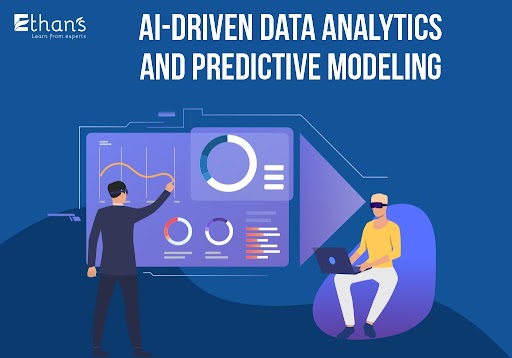
AI-Driven Data Analytics and Predictive Modeling

Data Analytics and Predictive Modeling

Are you an engineer or an experienced technology professional looking to pursue a career in AI-driven analytics and predictive modeling? While driving transformations, these are breakthrough technologies that would generate millions of new jobs. So, let’s explore them and a few other aspects of them. AI’s Growth – Energy Consumption – Relation with AI-Driven Data Analytics and Predictive Modeling AI’s exponential growth excites us all. However, while appreciating that, we often tend to ignore the other side – AI’s energy consumption! Now, why talk about AI’s energy use when the topic is AI-driven data analytics and predictive modeling? There’s a relationship between both and we will come to it soon. So, AI data is stored on massive server farms that consume unimaginable energy. Let’s consider the simple example of ChatGPT. When you enter a prompt in it, the chatbot processes it using its servers hosted in data centers. These centers use up to 1.5 percent of the entire global electricity! Isn’t that surprising? Of course, as users of AI, we would never think about it. Thus, AI’s value in the future will be determined not by money or the jobs it will replace but by the energy it will consume. However, how do you derive such conclusions? It is through AI-driven data analytics and predictive modeling. AI-driven data analytics and predictive modeling are at a very high level of competition in the market. It might surprise you but these domains don’t yet exist in India as no player has invested in building servers and data computational farms AI requires. OpenAI works on Microsoft servers, which aren’t present in India now. However, it will as efforts are underway to bring it into the country. A Bangalore startup has invested a significant amount in this direction. So, although AI-driven analytics and predictive modeling haven’t taken off in India yet, they will do so in the near future and create a demand for professionals well-versed in it. That’s how learning them steps in and is important. Let’s begin with what AI-driven data analytics and predictive modeling are. About AI-Driven Data Analytics and Predictive Modeling AI Data Analytics AI data analytics uses AI to analyze large data sets, simplify trends and provide data analysts with vital insights. It helps support, automate, and simplify every stage of the journey of data analytics. AI tools can help collect data and prepare it for analysis. Further, you can train ML models and apply them to the prepared data to uncover patterns and insights. Eventually, AI enables analysts to comprehend and interpret trends and insights to drive better and more informed decision-making. AI-driven data analytics can be used anywhere. For example, analysts can use it in the retail space, while dealing with massive data sets, comprising structured and unstructured customer data. It can help large retail players analyze data concerning various areas, including sales, loyalty program sign ups, average customer spending, highest-selling products, etc. These insights can steer informed decisions about inventory, marketing tactics, and more. Read Full Blog – Phases of Data Analytics Lifecycle Predictive Modeling Now, what is predictive modeling? OK. So, the need for predictive modeling stems from the curiosity of knowing what will happen in the future or projecting the outcome of a particular event. So, predictive modeling is a statistical technique that helps analysts predict the results of future events based on historical data. It involves creating a mathematical model that collects relevant input variables and produces a predicted output variable. Let’s look at an example of a predictive modeling application to understand it better. Risk is an integral part of the BFSI sector. A financial institution wouldn’t be able to compute the amount of risk involved in onboarding a particular customer only by looking at them or their photo IDs, etc.  This is where AI plays a role as it helps build predictive models to help institutions determine the risk involved in customers and transactions. While providing loans, banks use credit scoring models to assess a client’s repayment ability.  Similarly, they can use a statistical model to predict if a customer is likely to miss an EMI in the next two to three months or so! Additionally, predictive modeling helps assess people without a credit history. AI Analytics and Predictive Modeling Career Opportunities AI data analysts blend conventional data analysis skills and AI-ML expertise. Their skills aren’t confined to interpreting historical data but making crucial projections, and accelerating and enhancing decision-making across various departments. Hence, their crucial role in a company makes them in-demand professionals.  Some roles include AI Data Analyst, Data Scientist, Financial Data Analyst, Risk Analyst, Healthcare Data Analyst, and Retail Analytics Specialist. AI data analysts have a place in every company that uses AI to analyze data, draw inferences, and make informed decisions. On the other hand, predictive modeling is an area of expertise used across various job positions and realms. For example, a bank data scientist can use predictive modeling to project outcomes and help the organization make educated decisions about customer onboarding, risks, etc.  Thus, predictive modeling can come in as an upgrade for such a person as it will help them enhance their skills and deliver more value to the company. Similarly, some other positions or professionals who must learn predictive modeling include AI programmers, financial data analysts, product data scientists, etc. Final Words AI data analytics and predictive modeling help you analyze quicker, and better and make informed predictions by leveraging AI’s predictive capabilities. They are emerging as technologies and also as encouraging career options, particularly given AI’s increasing dependence across the business world. However, these are specialized areas requiring you to pursue formal education under expert trainers and through a competent course curriculum. Data science and data analytics courses in Pune prove crucial in this regard. Experienced and credible institutes like Ethan’s continuously update and upgrade them as per industry needs, ensuring competent education. Additionally, the abundant practical exposure you receive during the course prepares you better for the challenges as well as … Read more

Career Opportunities After Completing a Data Science Course in Pune

Career Opportunities

Data science is now one of the imperative components of the modern technologically advanced society. Due to the recent technological advancements that led to the massive generation of big data, the employment of data scientists has become a necessity. Presently, Pune is popularly called the Oxford of the East due to the prominence of education and technology industries which is the best place to do a data science course. This article examines potential career paths that one is likely to get after pursuing the data science course in Pune.  The Increasing Trend of Data Scientists Data science is a combination of distinct disciplines that employ scientific analysis, procedure, algorithm, and system to obtain intelligence from ordered and disordered data. In essence, being a data scientist is a very important part of an organization and is mainly tasked with the responsibility of aiding an organization to make the right decisions, manage its operations, and competitiveness better than its rivals. LinkedIn’s report reveals that data science is among the most rapidly growing professions in the global job market, and there are many vacancies annually. Hyderabad, being an IT hub, also houses multiple opportunities for data insights specialists, while Pune – an educational hub holds great potential for data scientists.  Top Profession in Data Science 1. Data Analyst A data analyst’s job is to put together facts and convert them into intelligence that can be used in the company. This position entails data acquisition, analysis as well as use of statistical methods. The data analysts work closely with the stakeholders to define further potential improvements to the processes and to provide recommendations. After undergoing a data science course in Pune, the students become ready for this position, especially with the presence of many job opportunities in this city in the IT and business fields.  2. Data Scientist Data scientists on the other hand go a notch higher by building sophisticated models and formulas to forecast trends that are likely to happen in the future. Skills in data science involve machine learning, statistical analysis, and programming to reveal patterns that lie inactive in data. Startups, many IT firms, and other businesses make Pune an ideal location for data scientists to work. Several organizations across Pune are always on the lookout for competent data scientists in a bid to define and secure their data goals and objectives.   3. Machine Learning Engineer Machine learning engineers develop the strategies behind and put into practice machine learning solutions for enterprises. A candidate must know programming languages, mathematics, and data science theories for this position. Due to Pune’s convergence towards the technology and innovation industry, machine learning engineers are in great demand. Thus, data science courses in Pune prepare a candidate for this competitive and lucrative field.  4. Business Intelligence Analyst Business Intelligence analysts possess the key duty of trying to determine particular patterns through the use of big data in the business world to assist in the decision-making process. They prepare reports, executive dashboards, and data visualization tools to communicate their findings to the management. Pune is in the rising and evolving center of infrastructure and hence, there are many organizational prospects for Business Intelligence analysts to add value. In some ways, the data science course in Pune provides training to those aspiring to become powerful quantitative resources in organizations and capable of presenting the analyzed data most convincingly.   5. Data Engineer To provide support for data generation storage and processing, data engineers are responsible for constructing and managing the physical structures. They make sure the data is ready and can be easily used and trusted. Data Engineer deals with big data sets as well as using data pipelines. Therefore, Because of the enhancement ratio in technical aspects and enormous empirical evidence of technologically advanced organizations in Pune, data engineers make the city convenient for conducting complex projects. The persons who successfully finish a data science course in Pune acquire technical skills that are essential for becoming the best data engineers. 6. Statistician Statisticians use mathematical principles and tools for data analysis and decision-making in solving practical life problems. Some of them work in the healthcare sector, others – in the sphere of finance, while some can be found in government agencies. Pune’s industries are of various types and therefore statisticians will find many available opportunities there. An education in data Science in Pune largely introduces individuals to known statistical methods to design and conduct analysis, making it possible for one to become a statistician.  7. Data Consultant The sole role of data consultants is to help organizations come up with the best data strategies and adopt the required data solutions. They give recommendations in the areas of data, analysis, and business technologies. It is therefore apparent that with its numerous businesses as well as start-ups, Pune provides data consultants with a chance to be influential. Mainly, people who go for a data science course For beginners get prepared to offer consultancy services as they are provided with adequate knowledge and skills in the respective field.  Read Full Blog – What to Expect from a Data Science Course: Curriculum Breakdown Conclusion Data science courses in Pune can be accounted for as a truly fascinating career option. The opportunities for data science talent are still great, and owing to the ever-changing ecosystem of Pune. It is a great place to build or even enhance a career in data science. Whether you aim to become a data analyst, data scientist, or machine learning engineer, Pune has everything you need. It provides all the resources required to transform into a professional in the data science field. Enroll in a good data science course in Pune and embark on a perfect rewarding start that one would need for a great and exciting career in data science. 

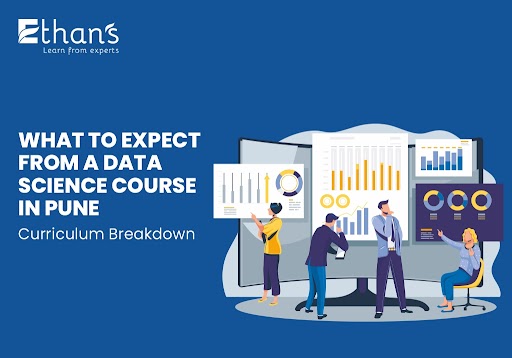
What to Expect from a Data Science Course in Pune: Curriculum Breakdown

What to Expect from a Data Science Course

Data science is a relatively young domain that has attracted considerable attention in the last decade due to the role played by data in organizations’ decision-making processes. Pune is famously known as the “Oxford of the East” because of the prominence of education in the city and has emerged as a preferred destination for young data scientists. This article gives a complete insight into what a data science course in Pune entails; the plan of study and the result expected at the end of the course.   Introduction to Data Science Any course in data science that is being offered in Pune begins with getting the students acquainted with important concepts of data science. Learning at this stage is important because it builds the basis for future concepts to be taught. Students learn about:   Data Types and Structures: Knowing the kinds of data such as structured, unstructured, and semi-structured data and the process of storing them.  Data Collection Methods: Methods of collecting information from different sources such as databases, web scraping pages, and Application Programming Interface.  Data Cleaning and Preprocessing: Techniques used to prepare data for analysis, one which is data cleaning.   Programming for Data Science Thus, basic programming skills are mandatory skills for any data scientist. Courses in Pune typically cover:   Python and R: These are the fundamental programming languages used in data science. The elements that form the offered curriculum refer to syntax, libraries, and frameworks useful for data handling and processing.  SQL: Structured Query Language is also a crucial aspect that allows it to manage and query relational databases. By the time a student gets to this level, they can write optimized SQL queries that help in retrieving and transforming data.  Big Data Tools: Familiarity with big data technologies such as Hadoop and Spark which are very important for managing massive datasets.   Statistics and Probability It cannot be overemphasized that statistics and probability are the cornerstones of data science. Courses in Pune cover:  Descriptive Statistics: Descriptive statistics entails summarizing and describing the main characteristics of a set of data.  Inferential Statistics: Strategies of concluding populations where the entire population data is unknown but an entire population is a subset of the samples obtained.  Probability Theory: Knowledge about the risks and probabilities for certain results, which is vital when doing probabilistic analysis.  Data Visualization As has been postulated, the management of big data entails data analysis and explanation. Key areas include:   Matplotlib and Seaborn: These are the Python libraries that are commonly used in creating static, animated, and interactive plots.  Tableau: It is rather a very useful tool, which is used to design and develop complicated dashboards and analytic visuals.  Plotly: An Open Source, JavaScript-based library to create dynamic, highly interactive and publication-quality graphs online.  Machine Learning   It is also worth knowing that machine learning is always the central part of any data science curriculum. In Pune, students can expect to learn about: Supervised Learning: Supervised learning techniques that involve an element of teaching the model with pre-assigned labels. Included subjects are regression analysis, logistic regression analysis, decision trees and support vector machines.  Unsupervised Learning: Generic forms for training based on a data set without prior labeled outcomes. Discussed materials are clustering algorithms such as K-means, or hierarchical clustering and dimensionality reduction methods like PCA, and t-SNE.  Reinforcement Learning: A branch of Artificial Intelligence in which an agent acquires knowledge in how to make decisions through taking actions in an environment with a view of getting the largest amount of reward in the long run.  Deep Learning  The second subfield is machine learning, the subfield that deals with neural networks and their uses is called deep learning. The curriculum often includes:  Neural Networks: Perceptron, activity function and Feedforward neural network as a primary component of deep learning.  Convolutional Neural Networks (CNNs): It can be utilized mainly in image identification, or other words, the assessment of objects as visual images.  Recurrent Neural Networks (RNNs): It is used in sequence generation problems such as time series analysis and natural language processing (NLP).  Natural Language Processing (NLP) The next type of data which requires natural language processing is text data. A data science course in Pune typically covers: Text Preprocessing: Pre-processing methods like Tokenising, Stemming, Lemmatizing, and Stopword Elimination.  Sentiment Analysis: About the comprehension and analysis of the qualitative characteristics of text data.  Text Classification: Techniques to assign a given test text into already specified classes.   Capstone Projects and Internships  Real-life experience or field experience is very important when it comes to data science. Most courses in Pune include:  Capstone Projects: Since people are naturally creative, teaching them involves giving them comprehensive projects that can enable them to solve real-life issues as they incorporate what they have been taught. In these projects, there is the use of datasets from industry partners, which are incorporated in creating such projects.  Internships: The various chances to work with the companies and get practical experience as well as acquainted with the companies’ representatives. Soft skill and professional development One must understand that knowledge in the technical domain is not enough to make a perfect data scientist. Courses in Pune also put focus on: Communication Skills: Understanding the best approach in presenting data and insights to top-shape technical personnel and other general business persons.  Team Collaboration: Working in teams, often on collaborative projects, to mirror real-world data science environments. Ethical Considerations: Understanding the ethical implications of data science and ensuring responsible use of data. Learning Outcomes  By the end of a data science course in Pune, students can expect to:   Master Core Concepts: A solid grounding in the subject matter with knowledge of data manipulation and statistical analysis as well as machine learning techniques.  Develop Technical Proficiency: Familiarity with programming languages such as Python, R, and SQL as well as tools like Tableau, Hadoop and Spark.  Apply Theoretical Knowledge: Skills in using and explaining different machine learning types and methods.  Create Visualizations: Competence in the process of data visualization and production of informative reports and dashboards.  … Read more

Why is Time Series an Analyst’s Best Tool for Analysis?

best analytical methods for analysts

Effective data analysis is one of the cornerstones of every organization’s success in the contemporary business environment. To do so and drive optimal value from the available data, analysts use various analytical methods. One of them is time series data analysis. However, precisely, what makes time series one of the best analytical methods for analysts? As an aspiring analyst looking to pursue data analysis courses in Pune, understanding it can help you use time series more effectively. Here’s more to it. What is Time Series Analysis? Time series analysis is a precise way of analyzing a sequence of data points gathered over a time interval. Instead of merely recording the data points intermittently or randomly, it allows analysts to record data points across consistent intervals over a set period. Nevertheless, time series analysis doesn’t restrict itself to collecting data over time. It also shows how variables change over time. Time proves a critical variable as it shows data adjustments over the course of data points and the outcomes. It offers an additional information source and an order of dependencies between the data being analyzed. Generally, time series requires several data points to ensure reliability and consistency. It allows analysts to have a considerable representative sample size. Additionally, the method enables analysts to ensure that patterns discovered aren’t outliers and understand that patterns can also contribute to seasonal variance. Furthermore, analysts can use time series data to make forecasts, based on historical data. Benefits of Time Series Analysis – Why Developers Use It? Analysts use time series to help businesses comprehend factors contributing to trends or systems patterns over a particular time frame. By using data visualizations, organizations can see seasonal trends and unearth the reasons for the occurrence of various trends.  Besides, while analyzing data across intervals, businesses can use time series to forecast the probability of future events. It can highlight potential changes in the data to understand data variables better and make more informed and near-accurate forecasts. With that said, let’s look at some benefits of time series analysis that make it an excellent analytical method for analysts. Pattern Identification Time series helps analysts identify patterns over a particular period. Let’s understand this with an example. For instance, retail is a trend and pattern-driven business. The high seasonal and demand fluctuations in this industry require retailers to stay abreast of these changes and ensure continuous analysis. Time series analysis can help here. It can help retail data analysts identify seasonal sales patterns, and comprehend demand and supply equations across a particular timeframe to make inventory and market-related decisions.  On the other hand, even when it comes to oil and gas companies, analysts can identify and decipher consumption trends to make informed usage forecasts within a particular region and make decisions to optimize production. Another example is that of the stock market, wherein data analysts can help identify market shifts and help the user or business respond to them optimally.  Data Cleanup Another significant advantage of time series analytics is that it allows an analyst to help remove noisy data and outliers that cloud an analyst’s understanding of trends and consequently affect the decision-making process. The analysis method helps increase the reliability of the data and makes it more interpretable with techniques like smoothing and seasonality adjustments. Analytical Efficiency As stated above, time series analysis requires a huge amount of data. However, in some cases, even less data can lead to more insights. It is because time series analysis enables data analysts to focus on critical metrics and periods to derive valuable insights. The method lets analysts do so without letting excessively intricate models or datasets overwhelm them and affect decision-making. Improved Data Accuracy and Quality In addition to the above, data accuracy helps improve data accuracy by identifying and rectifying missing values and anomalies within a particular dataset. It helps improve data integrity and reliability vital for accurate predictions and analysis. With phenomenal data cleaning capabilities, time series help ensure dataset completeness and cleanliness. Speaking of data quality, techniques like interpolation and extrapolation can help fill gaps and enhance data quality. Thus, cleaner and higher-quality data can enable more accurate and precise data analysis and forecasting. Lowered Noise Impact Time series analysis helps reduce the impact of noise on datasets. With that, it enhances the accuracy of forecasts and analytical outcomes. As mentioned earlier, the spots and removes outliers that often cause the noise to distort the true signal in the data.  Furthermore, analysts can use time series analysis to identify missing values, enabling precise imputation and smoothing to build a more logical dataset. Analyzing percentage differences between observations can enable analysts to minimize the impact of noisy data points and facilitate a cleaner analysis. Role of Python in Time Series Analysis Python is extensively used for time series due to the several libraries that simplify time series analysis and make it more efficient. These libraries offer numerous functionalities, including data manipulation, visualization, modeling and forecasting. These help you explore underlying patterns and trends in a particular dataset. Some key Python libraries used for time series analysis include the following. pandas: This is a preferred library for data manipulation and analysis, It provides user-friendly data structures and functions to work with structured data. numpy: numpy is a basic package for scientific computing with robust N-dimensional array objects and tools for integrating C/C++ and Fortran code. matplotlib: This one is a plotting library that produces quality figures in different formats. It is an apt library for data visualization. statsmodels: It is a library that enables you to estimate statistical models, perform statistical tests, and discover statistical data. yfinance: With this library, you can retrieve the latest financial data from Yahoo Finance. scikit-learn: This is a versatile Python library with simple and efficient tools for ML, data analysis and data mining. Conclusion Understanding time series analysis is one of the essential aspects of a data analyst’s work profile. In a nutshell, time series analysis helps data analysts enhance data … Read more

Data Scientist Salary in India And The Factors That Affect Them

data science courses for beginners

Professional or career-oriented courses have a certain commercial value attached to them. A data science course in Pune, one of the most in-demand amongst IT aspirants, isn’t an exception. Thus, while factors like the course’s quality and curriculum hold relevance, what also matters to students is the salary they would draw after the course.  Accordingly, how much do data scientists in India earn or what is the real salary of a data scientist are a couple of common questions students ask us. If you also are wondering about it, we consider it imperative to answer the question. So, here’s more to data scientist salary in India and factors that matter. What is Data Science? Data has emerged and evolved into one of the most valuable assets for every business. Today, every contemporary organization relies on data for strategies, decision-making, and growth.  However, data proves useful only when you process and structure to derive sense from it. This is where data science comes into play. It deals with extracting valuable insights and knowledge from data. Data science blends various mathematical, statistical, domain-based, and computer science techniques to analyze and interpret massive data volumes and complex datasets.  As a sector, data science is a burgeoning one, projected to surpass the USD 500 billion mark by early next decade! Thus, while data is valuable, the ability to process and analyze it to drive value is priceless. Accordingly, your decision to pursue a data science course in Pune isn’t merely right but visionary. However, what do data scientists do, and what value do they offer to their employers or clients? Let’s overview some of the data scientist roles and responsibilities. Data Scientists – What Do They Do? Data scientists gather, analyze, and interpret massive data volumes to derive valuable insights. They apply various skills, including but not limited to mathematics, statistics, and those related to programming to analyze and interpret the available data. Companies look up to data scientists as the latter provide useful information concerning consumer behavior, patterns, trends, etc. The insights they provide support informed decision- and strategy-making. Data scientists perform numerous functions. Primary ones include the following.  Data Extraction: Fetch useful data from multiple sources. Data Cleansing: Remove irrelevant data and prepare it for processing Data Processing: Process the data via various approaches via analytics, ML, predictive models, etc., to derive valuable insights. Data Visualization: Present the data in an easy yet coherent format. The value data scientists provide qualifies them for a handsome salary package. So, let’s move to the core discussion – data scientist salary in India.  Data Scientist Salary in India Data scientists are amongst India’s highest-paid professionals. All thanks to the most valuable element with which they deal – data. As for data scientist salary, you will find multiple figures associated with it. However, we’ve taken an approximate average for varying experience ranges in the following table.    Experience Annual Approximate Salary Range Fresher to 2 years Rs. 6-9 lakhs 2 years – 4 years Rs. 9-10 lakhs 4 years – 6 years Rs. 10-12 lakhs 6 years – 8 years Rs. 12-14 lakhs 8 years – 10 years Rs. 14-16 lakhs Data scientists with over a decade of experience can demand a higher salary. However, data scientist salary in India depends on various factors like the employer’s paying capacity, projects on hand, the value of certification, extent of knowledge, current market situation, and many others. Speaking of cities, data scientist’s average annual salary range in Pune is between Rs. 9 lakhs to 10 lakhs. Note: The above serves only as a reference. The actual salary figure in your case may vary depending on the factors mentioned above.  Factors that Matter While Eyeing Remunerative Data Science Career Opportunities While everyone intends to receive a high-salary package for their attributes and knowledge, a few factors matter while expecting a high remuneration. Data Science Course: The data science course in Pune you choose is the most important factor. It includes the course curriculum, its competence, and comprehensiveness. The more you learn from the course, the broader your career opportunities. Hence, you should always evaluate the course curriculum and get it reviewed by a data science expert you know to assess its competence and practical value.  Institute’s Reputation: Institutes also play a crucial role. Factors like the institute’s credibility, reputation, student feedback, quality of trainers, pedagogy, placement opportunities, industry tie-ups, associations, etc., matter while making you a learned data scientist. Practical Exposure: Whether you choose a data science course for beginners or an advanced one, the practical exposure the curriculum provides also determines your commercial worth as a data scientist. Industry Understanding: Your understanding of the industry that you gather during the course also holds relevance. That’s because professional courses aren’t meant to impart merely academic knowledge but also prepare students for industry challenges. Certificate Value: The weightage of the certificate your institute provides you is another crucial aspect. Accordingly, you should choose only institutes with globally accepted and recognized certificates. Level of Placements: Lastly, the level of placements also matters. The type of placement associations and the quality of companies tied up as an employer play a crucial role in determining your salary as a data scientist.  Unlock the Doors to a Promising Data Science Career with Ethans! Ethans is one of the premier choices for data science courses in Pune and data science courses for beginners. As a distinguished technology institute, we offer comprehensive courses, provide a competent learning infrastructure, nurture a team of experienced faculty members, and ensure abundant industry exposure. Additionally, our extensive placement associations and track record make us a data science institute to reckon with.  Call us at +91 85510 13133 to connect with our counselors and explore more about our data science courses and career prospects.

IT Recession In India 2024

IT Recession In India 2024

In recent years, India’s Information Technology (IT) sector has been a powerhouse of economic growth and innovation, driving the country’s development and contributing significantly to its GDP. However, the year 2024 has brought unprecedented challenges to this once-booming industry, with the onset of an IT recession. This article explores the causes, consequences, and potential solutions to the IT recession in India. The IT recession in India refers to a period of economic downturn specifically affecting the Information Technology sector. It is characterized by a slowdown in demand for IT products and services, leading to reduced revenue, job losses, and other adverse effects on the industry. The term “recession” reflects the market’s transformative needs, not just economic downturns. It’s a call for industry-wide adaptation. Embracing change is vital to staying relevant. This shift demands proactive transformation from all industry stakeholders to thrive in evolving markets. Factors Contributing to the IT Recession Global Economic Slowdown The global economy plays a significant role in shaping the fortunes of the IT industry. Factors such as trade tensions, geopolitical conflicts, and the COVID-19 pandemic have contributed to a general slowdown in economic activity worldwide. As a result, businesses have scaled back their IT investments, leading to reduced demand for IT services and solutions.  Technological Disruptions The rapid pace of technological change has both fueled growth and posed challenges for the IT sector. Emerging technologies like artificial intelligence, blockchain, and the Internet of Things have transformed industries and business models, creating new opportunities while rendering some traditional IT services obsolete. Companies that fail to adapt to these changes risk falling behind and losing market share. Learn the most in-demand Data Analytics Skills from Industry experts at Data Science Course in Pune, Explore Now! Policy Changes Government policies and regulations can have a significant impact on the IT industry. Changes in taxation, immigration laws, and data protection regulations can affect the cost of doing business and the ease of access to talent and markets. Uncertainty about future policies can also dampen investor confidence and hinder long-term planning. Impact on IT Professionals The IT recession has had a profound impact on professionals working in the industry. Job Losses and Salary Cuts Many IT companies have been forced to downsize their workforce in response to declining demand and shrinking profit margins. This has led to widespread layoffs and furloughs, leaving many skilled professionals unemployed or underemployed. Those who remain employed have often had to accept salary cuts and reduced benefits as companies tighten their belts to survive the downturn. Shift in Demand for Skills The nature of work in the IT industry is constantly evolving, driven by changes in technology and business requirements. In times of recession, there is often a shift in demand for certain skills, with greater emphasis placed on cost-effective solutions, automation, and digital transformation. Professionals who possess in-demand skills such as cloud computing, cybersecurity, and data analytics are better positioned to weather the storm and remain competitive in the job market. Effects on IT Companies The IT recession has taken a toll on companies across the entire spectrum of the industry. Decline in Revenue Many IT companies have seen their revenue streams dry up as clients postpone or cancel projects in response to economic uncertainty. This has forced companies to lower their prices, offer discounts, and pursue new business opportunities to stay afloat. Some companies have been forced out of business altogether, unable to survive the prolonged downturn. Consolidation And Restructuring In an effort to survive the recession, many IT companies have resorted to consolidation and restructuring measures. Mergers, acquisitions, and strategic partnerships have become increasingly common as companies seek to reduce costs, gain market share, and diversify their offerings. This has led to a wave of layoffs, office closures, and other cost-cutting measures as companies streamline their operations and focus on core competencies. Layoffs Many tech companies are cutting jobs at a rate similar to 2020’s COVID-19 impact. It’s affecting big names like Meta Platforms and Amazon, along with smaller firms. This trend extends to Indian IT services and startups, signaling broader economic shifts. Stay ahead by mastering Data Analytics with experts at Pune’s Data Analytics Course! Government Initiatives to Address the Recession The Indian government has implemented several initiatives aimed at mitigating the impact of the IT recession and stimulating growth in the sector. Skill Development Programs To address the growing mismatch between industry demand and the skills of the workforce, the government has launched several skill development programs aimed at equipping IT professionals with the latest technologies and tools. These programs offer training and certification in areas such as cloud computing, cybersecurity, and digital marketing, helping professionals upskill and reskill to meet the changing needs of the industry. Incentives for startups Recognizing the importance of innovation and entrepreneurship in driving economic growth, the government has introduced various incentives and schemes to support startups in the IT sector. These include tax breaks, grants, and access to funding and mentorship programs designed to encourage innovation, create jobs, and spur investment in the sector. Future Outlook for the IT industry Despite the challenges posed by the IT recession, the future outlook for the industry remains cautiously optimistic. Recovery Prospects As the global economy gradually recovers from the effects of the pandemic and businesses resume their IT investments, the demand for IT products and services is expected to rebound. Additionally, the accelerating pace of digital transformation across industries is likely to create new opportunities for growth and innovation in the IT sector. Adaptation to Changing Trends To thrive in the post-recession era, IT companies will need to adapt to changing market trends and customer preferences. This may involve diversifying their service offerings, embracing emerging technologies, and adopting more agile and flexible business models. Companies that can anticipate and respond effectively to these changes will be well-positioned to succeed in the evolving IT landscape. For more information to check Ethans Tech about Job Oriented Courses with Placement Assistance. One major reason for job cuts is the … Read more

In Collaboration with

TIHs at IITs

100%
Job Assistance
Certification
Programs

100% Job Assistance
Certification Programs

Learn from Industry Experts &
IIT Mentors

6+ LPA

Avg Salary

12+ LPA

Highest Salary

53k+

Students Trained

Limited Seats Available

- Enroll Now!

Our Association

TIH at IIT Bombay

TIH at IIT Patna

TIH at IIT Palakkad